
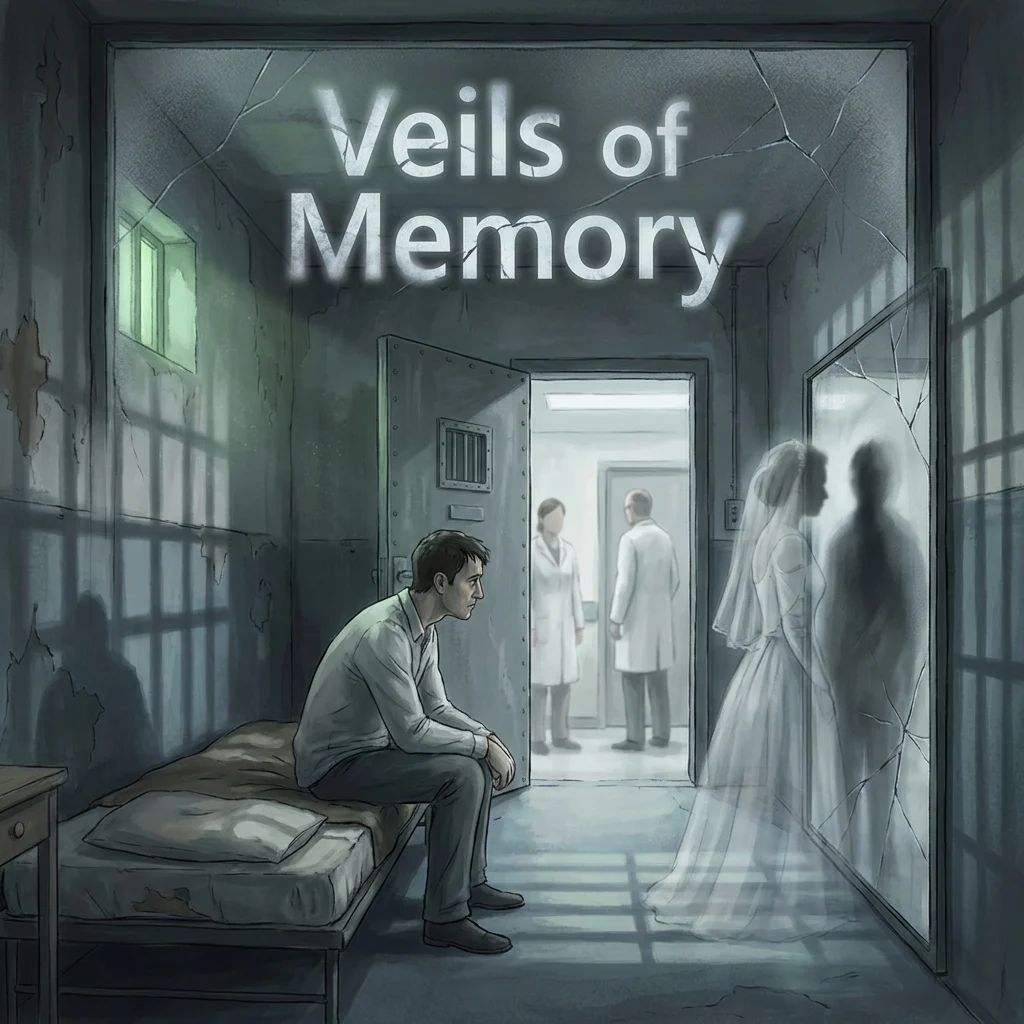
The clock on the mantel ticked with relentless precision, each second a hammer strike against Thomas Hale’s fracturing mind. He sat in the worn armchair, staring at the empty chair opposite him, where Eliza’s laughter used to dance like light on water. Three months since she left. The note lay on the side table, its edges frayed from endless readings: ‘I can’t do this anymore, Thomas. Forgive me.’
Forgive her? For what? The memories flooded in, unbidden. Their wedding under a canopy of oaks, her eyes sparkling as she said ‘I do.’ Lazy Sundays with coffee steaming, her head on his shoulder. The fights, too—sharp words over nothing, her tears he couldn’t console. Had he driven her away? Thomas, the esteemed history professor, master of facts, couldn’t pin down the truth of his own life.
He rose, joints protesting, and shuffled to the study. The photo album beckoned from the shelf, its leather cover smooth under his fingers. Page after page: Eliza at the beach, wind-tousled hair; Eliza at Christmas, ornaments glowing behind her smile; Eliza in their bed, sheets tangled from lovemaking. Proof. Tangible proof she had been real.
But doubt gnawed. Yesterday, at the faculty lounge, Mark had clapped him on the back. ‘Good lecture, Tom. Still flying solo?’ Solo? Thomas forced a laugh. ‘You know me.’ But inside, panic stirred. Mark had met Eliza. Dinners, barbecues. Hadn’t he?
That night, sleep evaded him. Dreams twisted: Eliza packing, suitcase in hand, then morphing into her screaming, ‘You never saw me!’ He bolted awake, heart thundering. The clock read 3:17. Same time every night since she left.
Morning brought resolve. He’d find her. Drive to her sister’s, demand answers. But first, coffee. As the pot gurgled, a shadow flitted past the kitchen window. Eliza? No, just a neighbor’s cat. Or was it? His pulse quickened. Paranoia, the books called it. But professors didn’t have paranoia; they had insights.
The drive to Ellen’s house blurred highways and strip malls. Ellen opened the door, brow furrowed. ‘Thomas? What’s wrong?’
‘Eliza. Where is she?’
Ellen blinked. ‘Eliza passed five years ago, Thomas. The cancer. You were there at the funeral.’
‘No!’ He thrust the photo at her. ‘This was three months ago.’
She studied it, face paling. ‘That’s… not Eliza. Looks like her sister, maybe. But Eliza’s gone. You should talk to your doctor.’
Back home, Thomas tore through drawers. Medical bills? None. Sympathy cards? Empty. His mind reeled. Introspection clawed: Was Ellen lying? Or was his memory the traitor? He recalled the hospital now—beeps, sterile smells, Eliza wasting away. No, that couldn’t be. She left. Angry, alive.
Days bled into weeks. Thomas skipped classes, holed up. Friends called—Mark, Susan. ‘Come out, Tom. You seem off.’ Off? They denied Eliza too. ‘Never met her, buddy.’ Lies. All lies.
Nights worsened. Whispers in the walls: ‘Thomas… why?’ Footsteps in the hall. Once, her perfume lingered on the pillow. He searched the house, flashlight beam cutting shadows. Nothing.
Introspection deepened, tense coils tightening. What if Eliza never existed? A hallucination born of loneliness after his divorce—no, he was never divorced. The facts slipped. He journaled feverishly: ‘Day 47. Saw Eliza at market. Blue coat, same as anniversary photo. Followed, lost her in crowd. Am I mad?’
The album mocked him. Photos seemed faded, faces blurred on second look. One night, desperation peaked. He dialed her old number. Voicemail: ‘This is Eliza Hale. Leave a message.’ Click. Heart soared—proof!—then crashed. The voice was his own, distorted.
Pacing, sweating, Thomas questioned everything. His lectures on unreliable narrators in history—irony. Had his mind fabricated her to fill voids? Childhood echoes surfaced: absent parents, empty house. Eliza as imagined companion, grown into wife.
But no. The love felt real, visceral. The pain clawed deep.
One evening, resolve hardened. He’d confront the truth. Dug under the loose floorboard in the study—childhood hiding spot. A box: letters, yellowed. Eliza’s handwriting: ‘My dearest Thomas, if you find this, remember our promise. The pain will fade.’ Dates from ten years back.
More: a marriage certificate. Real. Then hospital discharge papers—for him. ‘Post-traumatic amnesia following accident.’ Accident?
Memory flickered: car swerving, screams. Eliza beside him. Crash.
He stumbled to the mirror. Eyes hollow, face gaunt. ‘Who are you?’ he whispered.
The knock came at dusk. Sharp, authoritative. Thomas froze, box clutched. Opened the door to two men in white coats. ‘Mr. Hale? Time for your session.’
Confusion swirled. ‘Session? I’m fine—’
One smiled pityingly. ‘You’ve been doing well, Thomas. Three months without episodes. But the journals show regression. Imagining Eliza again?’
‘What? This is my home!’
The taller man guided him gently. ‘Your cell, Thomas. Room 14, Blackwood Psychiatric Wing. You’ve been here five years. Life sentence for Eliza’s murder. You strangled her in a rage, claimed she left. The crash? You staged it after, to fake suicide.’
No. Flashes: hands around her throat, her gasps. Suppressed, buried under fabricated bliss.
They led him down the hall—’hallway’ now bars, doors with slots. Mark was Dr. Markus, therapy group. Susan, nurse. The ‘apartment’—padded cell with mantel clock prop.
Ellen? Eliza’s sister, victim liaison.
The photos? Therapy aids, composites to trigger memory.
Thomas collapsed as cell door clanged. All those introspections, doubts—clues to the cage he’d built in his mind. Eliza hadn’t left; he’d taken her life. The memories of love? Veneer over guilt. The whispers? His conscience.
In the dim light, he saw her face in the small mirror: not ghost, but victim staring back. Forgiveness? Impossible. Only acceptance, in the unyielding grip of truth.