
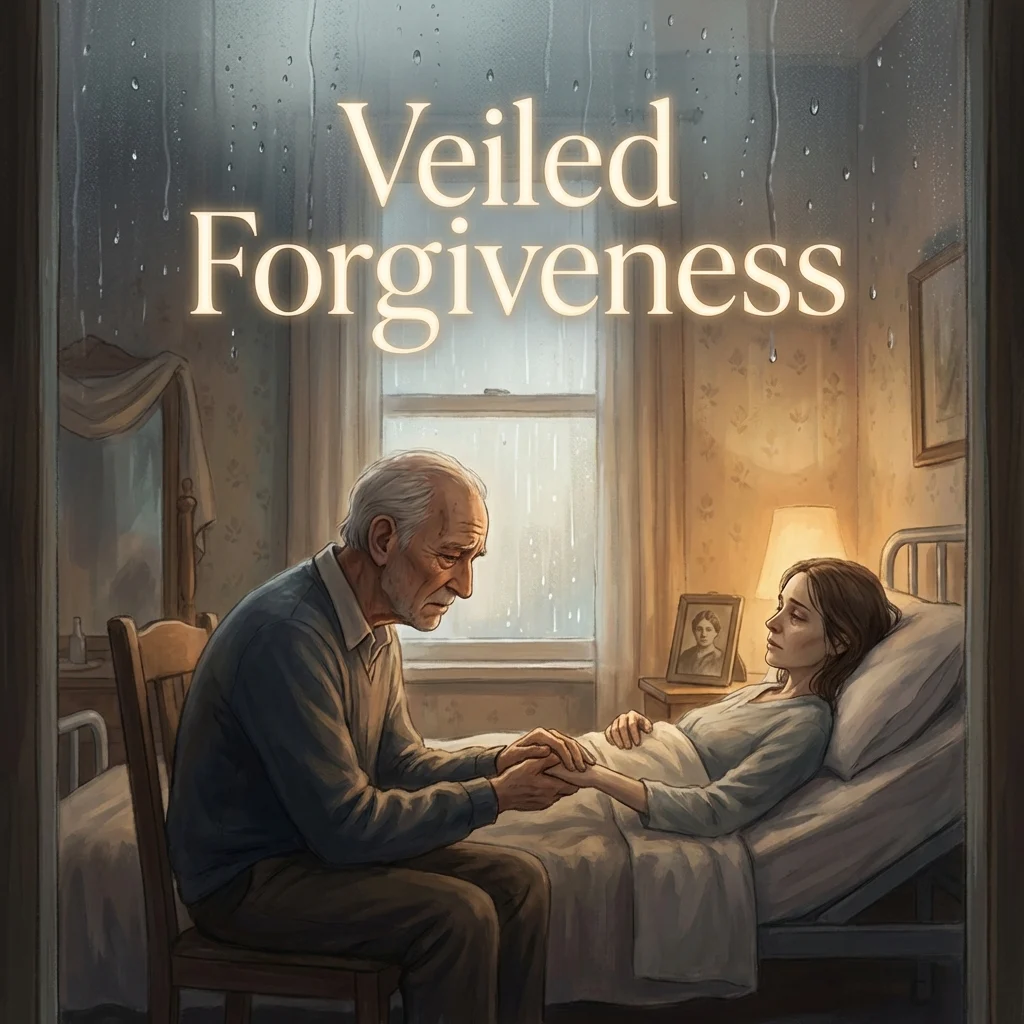
The hospice room smelled faintly of antiseptic and the faint, sweet decay of wilting lilies on the windowsill. David eased himself into the vinyl chair beside the bed, his knees protesting with a familiar ache. At sixty-two, time had carved deep lines into his face, mirroring the weariness in his mother’s eyes. Margaret—or what was left of her—lay small and fragile beneath the starched white sheet, her chest rising and falling in shallow, irregular rhythms.
‘Mom,’ David whispered, enveloping her cool, paper-thin hand in his own. Her fingers twitched faintly, a ghost of response.
Her eyelids fluttered open, revealing cloudy blue irises that once sparkled with life. ‘David… my boy. You came.’
Guilt twisted in his gut like a knife. He had come, yes, but too late. Or had he? The doctor said she had days, maybe hours. David had driven through the night from Chicago, leaving behind board meetings and a wife who understood but didn’t. His life was a success by all measures—a thriving accounting firm, a colonial home in the suburbs, children off at university. But success had a price: twenty years of sporadic phone calls, Christmas cards with photos of grandchildren she’d never met, and excuses that piled like unpaid debts.
‘I’m so sorry, Mom. For everything.’ His voice cracked.
She managed a weak smile. ‘Hush now. You lived your life. Made something of yourself. I’m proud.’
Proud. The word unlocked memories he’d buried deep. Childhood in the small Iowa town: endless summer days climbing the old oak, building forts from scrap wood. His father, stern but fair, teaching him to fix engines. Mother, always in the kitchen, flour-dusted apron, singing folk tunes as she baked pies. But then adolescence hit. Rebellion. Fights over curfews, college applications he filled out in secret. At eighteen, he left for the city, promising to visit. The visits grew rarer—internships, then jobs, marriage, promotions. Father died of a sudden heart attack ten years ago; David sent flowers and a check. Mother called less after that, her voice thinning to whispers of loneliness.
Over the following days, as monitors beeped softly and nurses padded in with medications, David stayed rooted to that chair. He confessed it all. The resentment for her ‘old-fashioned’ ways—making him mow lawns instead of playing ball, insisting on family dinners when he wanted freedom. The guilt when she wept on the phone during his sister’s wedding, alone because he’d chosen a work trip. The shame of his daughter’s birth coinciding with forgotten Mother’s Day cards.
Margaret listened, her head turning slightly toward him. She shared fragments of her own past. ‘Remember the treehouse? You fell from the roof, leg all scraped. I carried you two miles home, singing to distract you from the pain.’
He did remember. The warmth of her arms, the off-key lullaby. Tears welled. ‘I was so angry back then. Thought you held me back.’
‘You were a wild spirit, David. Needed to fly.’
Nights blurred into days. He brought photos from his wallet—his family, holidays. She nodded, murmuring approvals. But undercurrents stirred. She spoke of Emily, his younger sister, who stayed local, married the boy next door, raised three kids on the farm. ‘Emily bore it all after your father. The chores, the bills. She was the strong one.’
David shifted uncomfortably. Emily. The golden child. They’d clashed bitterly five years ago over selling the family farm for his ‘investment.’ He won; she retreated, bitter words exchanged. No contact since.
One stormy evening, thunder rumbling like distant artillery, Margaret’s voice grew urgent. Rain lashed the window, mirroring the turmoil inside David. ‘David… there’s a truth you need before I go.’
He leaned close, heart pounding. ‘What is it, Mom?’
Her gaze sharpened, piercing through the haze. ‘Your mother… she loved you more than life. But she never told you why she was so hard.’ A pause, breath ragged. ‘She wasn’t perfect. Favored Emily because… because you reminded her of your father. Too much like him—ambitious, restless.’
David frowned. This felt new, intimate. ‘I don’t understand.’
‘The night your father left… no, died. Angry words. She blamed herself.’ Her hand tightened. ‘But David, listen. Mom isn’t who you think.’
Confusion swirled. ‘Mom, you’re scaring me.’
A tear traced her cheek. ‘I am Emily, David. Your sister. Mother died twenty years ago, the night after Dad’s funeral. You didn’t come—said you were busy closing a deal. Guilt consumed you. Five years ago, dementia took hold. You thought I was her, called me Margaret, relived old fights. I’ve been coming every day to this facility, wearing her old nightgown, reading her journals aloud, pretending. To give you peace. To let you say goodbye, forgive her—forgive yourself.’
The world inverted. Flashes: Empty farmhouse after funeral, Emily’s red-rimmed eyes, his hasty departure. Years of vague calls, her voice strained. The ‘memories’—treehouse, pies—stories Emily knew intimately. The photos he’d shown? Emily had seen them at family gatherings he’d skipped.
‘All this time… you let me think…’
‘Family does that, brother. Loves without condition. Now, forgive. Live the time you have left.’
David—no, the illusion cracked—saw truth. His own frailty, the bed he’d thought hers. Emily’s face, aged but unmistakable, behind the silver wig.
As rain softened to drizzle, peace settled. Truth revealed too late for youth, but forgiveness, eternal. He closed his eyes, her hand warm now in his.