
The road to the cabin wound through the Whispering Pines like a vein pulsing with ancient blood. Elara gripped the steering wheel tighter as the trees closed in, their branches intertwining overhead, filtering the late afternoon sun into a melancholic haze. Her grandmother’s words echoed in her mind: ‘That place, child, where reality wears thin. It’s beautiful, but it hungers for the living.’ Gran had died six months ago, leaving the key in an envelope with a note: ‘Go when you’re ready. But don’t stay too long.’
Elara wasn’t sure what ‘ready’ meant. Life in the city had become a gray blur—dead-end job, empty apartment, the lingering ache of a breakup that felt like losing a limb. The cabin was an inheritance, a retreat, perhaps a way to feel close to Gran one last time. As she parked beside the sagging porch, a soft wind sighed through the pines, carrying scents of damp earth and something sweeter, like faded roses.
The cabin was smaller than she remembered from childhood visits, its wood weathered to silver, windows like watchful eyes. Inside, time had paused. The kitchen table bore the imprint of invisible elbows, the hearth cold but dusted with ash that swirled unbidden. Elara unpacked her bag—books, wine, a journal—feeling the air thicken around her, heavy with unspoken stories.
That first night, sleep came fitfully. Dreams bled into waking: shadows lengthening across the floorboards, forming shapes of people who turned away when she looked. A woman’s voice murmured from the walls, soft and sorrowful, reciting names Elara didn’t know. She woke to find her journal open, pages filled with looping script not her own: ‘He never came back. The pines keep him now.’ Shivering, she closed it, blaming fatigue.
Morning brought a deceptive calm. Sunlight poured through cracks, gilding motes that danced like lost souls. Elara hiked the trails, the forest otherworldly—moss glowing faintly, trees etched with runes that vanished on second glance. Birds sang melodies too harmonious, as if orchestrated from afar. Returning, she noticed the cabin had shifted slightly; the porch swing swayed gently though no breeze stirred.
Over lunch—simple bread and cheese—she felt watched. Glancing up, a figure flickered in the window: a girl in a white dress, hair like spun moonlight, staring with eyes full of longing. Elara blinked, and she was gone. Heart pounding, she searched the rooms, finding only cobwebs. ‘Imagination,’ she whispered, but the air tasted of salt, like tears.
Afternoons blurred into reverie. Elara sat by the window, sketching the pines, but her pencil drew faces—Gran as a young woman, laughing; a man with Elara’s eyes, carving wood. Memories not hers surfaced: dances under starlight, promises whispered in the dark, a child lost to fever. Melancholy wrapped her like fog, a profound sadness for lives unlived, loves unclaimed. The cabin seemed to pulse in rhythm with her heartbeat, walls creaking in sympathy.
By the third day, the veil thinned further. Voices wove through the wind—lovers quarreling, a child crying for mother. Elara followed one to the basement, stairs groaning underfoot. There, in the dim lantern light, objects from other eras: a porcelain doll with cracked smile, letters yellowed and perfumed. Touching the doll, cold flooded her veins, visions cascading—a birth, a wedding, a burial under the great pine. She stumbled back, gasping, the melancholy deepening to an ache that hollowed her chest.
Nights grew perilous. Shadows coalesced into forms: the girl appeared at bedside, extending a hand translucent as mist. ‘Stay,’ she pleaded, voice like rustling leaves. ‘He waits for you.’ Elara recoiled, but curiosity rooted her. Questions spilled: Who? What happened? The girl spoke of Elias, lost in the war, returning in whispers through the trees. ‘The pines hold the thin places. We slip through.’
Elara began to converse with the echoes. The man with her eyes—her great-grandfather?—shared tales of building the cabin on sacred ground, where worlds brushed like silk. ‘Reality frays here,’ he said, fading as dawn broke. ‘What you see is what you seek.’ She sought solace, and the cabin gave ghosts of family, weaving her into their tapestry. Joy mingled with sorrow, otherworldly peace in their embraces that chilled to the bone.
Yet unease gnawed. Food spoiled overnight, mirrors fogged with breath not hers, drawing hearts pierced by arrows. Elara’s reflections paled, eyes darkening with borrowed grief. Dreams turned vivid: she wandered endless pines, calling for someone just out of reach, roots tangling her feet. Waking drenched, she resolved to leave at dawn.
Packing by firelight, whispers intensified into a chorus—’Don’t go. You’re home.’ The girl materialized fully, more solid, tears tracing ethereal cheeks. ‘Elias promised. The veil mends with love.’ Desperate, Elara asked, ‘Who am I to you?’ The girl smiled sadly. ‘The one who listens. The bridge.’ A compulsion drew Elara outside, to the great pine looming like a sentinel.
Moonlight bathed the clearing, reality warping—stars swirling, ground undulating softly. Family appeared, not ghosts but solid: Gran young, great-grandfather, the girl—her aunt, lost young?—and Elias, handsome in uniform. They encircled her, singing a lullaby Elara knew from infancy. Warmth flooded her, otherworldly belonging erasing city loneliness.
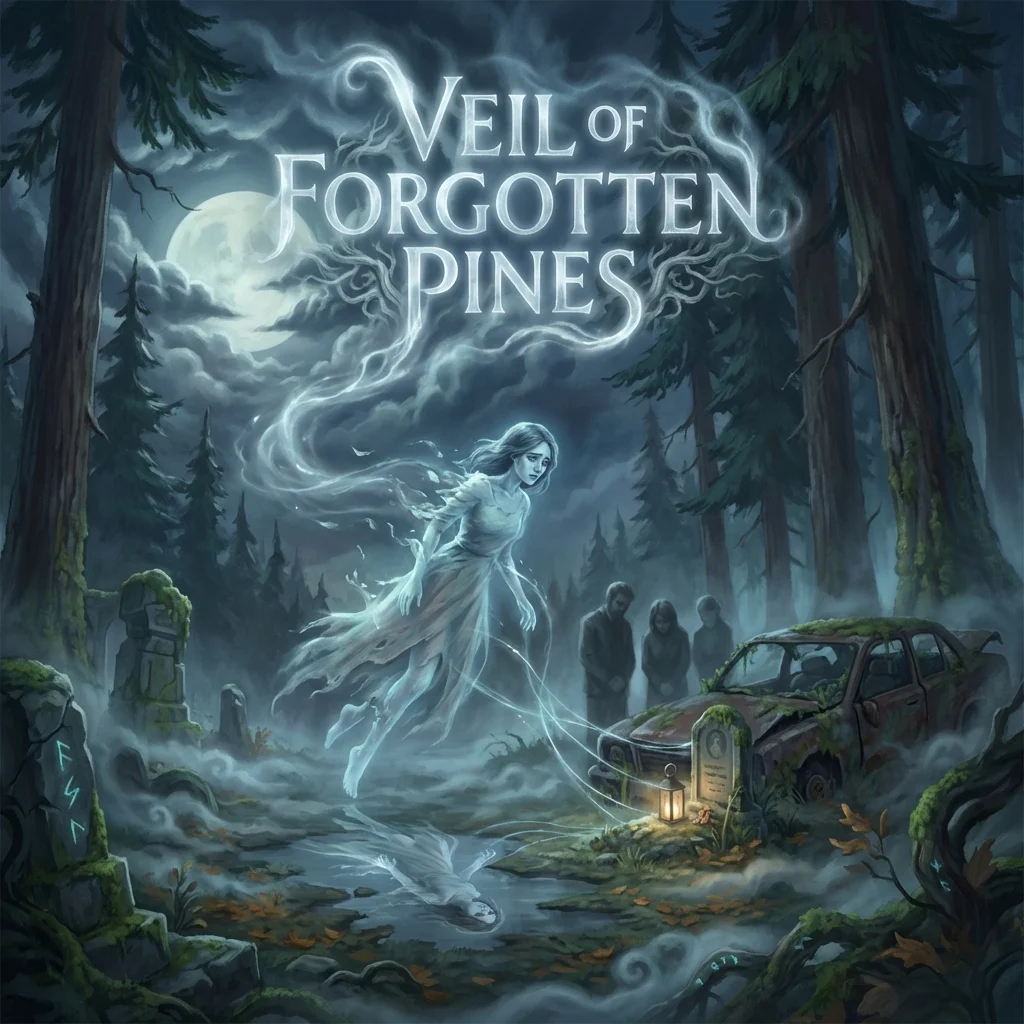
But as the song peaked, the scene fractured. The figures dissolved into mist, revealing her family—modern, alive—standing at a gravesite beneath the pine. Her mother sobbed, father stoic, siblings murmuring prayers. A headstone gleamed: Elara Jane Harlow, Beloved Daughter, Died October 15, 2018. Car accident on the mountain road.
Horror dawned. The drive up? A memory loop. Gran’s note? Her own suicide note, cabin the site of her end, pills by the hearth. The ghosts weren’t others’; they were her, fragmented soul refusing silence. The ‘family’ visions her longing projected, reality thin because she was the presence awakened—from death. The living mourned annually, their visits thinning the veil, letting her glimpse life she abandoned.
She clawed at the pine, bark yielding like flesh, screams swallowed by wind. As dawn crept, figures faded, her form translucent. Melancholy crested—not theirs, but hers eternal. The cabin waited, hungry no more, veil sealing with final sigh. Pines whispered her name, forever home in the thin place.