
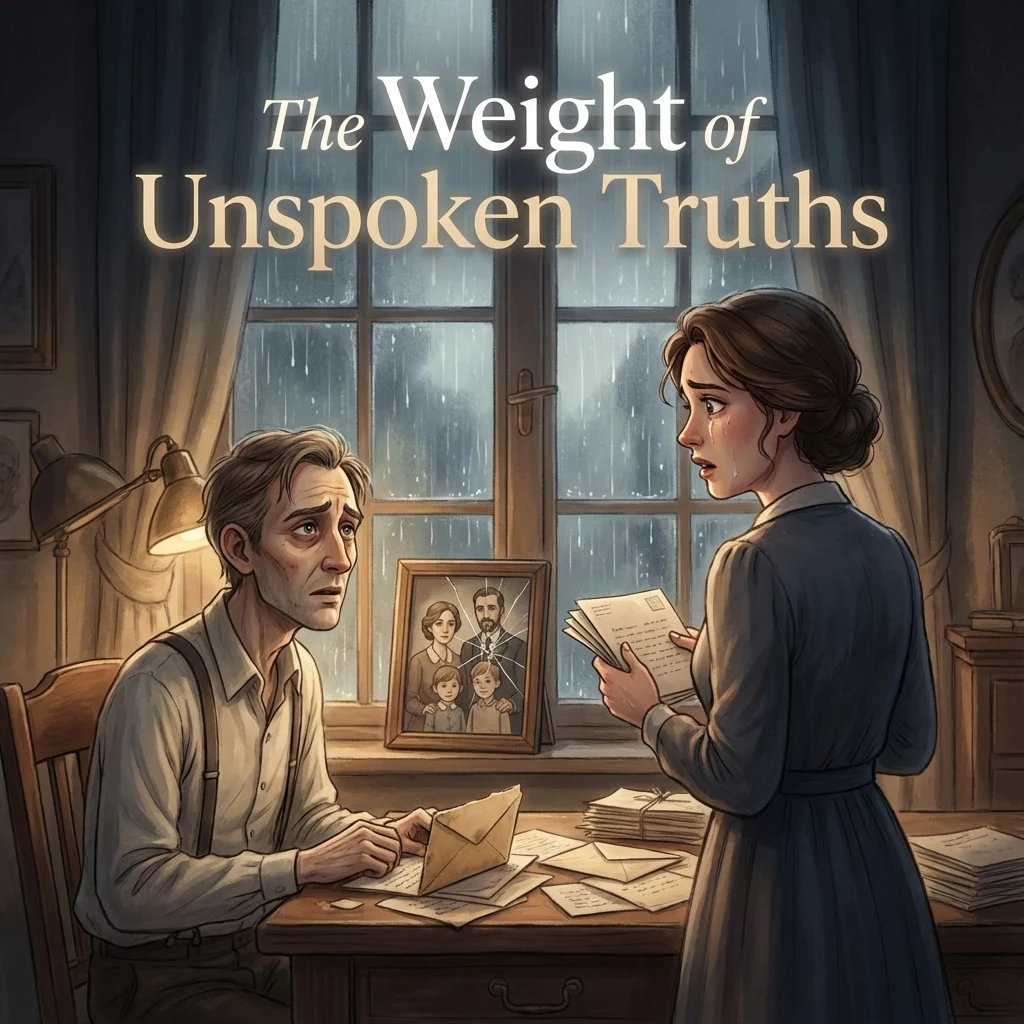
Clara pulled up to the old Victorian house on Maple Street, the engine of her rental car ticking as it cooled in the late afternoon sun. The paint was peeling, the porch sagging under years of neglect, much like the man who lived inside. David, her older brother by five years, had called two weeks ago, his voice a rasp over the phone: ‘I don’t have much time, Clara. Come home.’ She hadn’t seen him in a decade, not since the reading of their father’s will, when words like ‘thief’ and ‘ungrateful’ had flown between them like shrapnel. Now, here she was, suitcase in hand, stepping onto the creaking boards.
David answered the door propped on a cane, his frame gaunt, skin stretched tight over bones, eyes sunken but sharp. ‘You came,’ he said, no warmth, just fact. She nodded, throat tight, and followed him inside. The air smelled of dust and stale cigarettes, furniture shrouded in sheets like ghosts. He led her to the living room, where a hospital bed dominated the space, monitors beeping softly.
‘The hospice nurse comes mornings and evenings,’ he explained, sinking into an armchair. ‘I can manage the rest. Guest room’s upstairs.’ Clara set her bag down, glancing at the photos on the mantel: their parents young and smiling, her and David as kids, gap-toothed and inseparable. That innocence felt like a lifetime ago.
The first few days were a tense dance. Clara cooked simple meals—soup, toast—while David picked at them, complaining about the blandness. They spoke in monosyllables: weather, the drive from the city, her job as a museum curator. At night, she lay awake listening to his labored breathing through the thin walls, memories surfacing unbidden. Childhood Christmases, David pushing her on the swing, defending her from bullies. Then adolescence, when Father began favoring her—extra lessons, college fund—while David worked odd jobs, resentment brewing like storm clouds.
On the fourth day, rain pattered against the windows as Clara sorted laundry. David shuffled in, clutching a faded photo album. ‘Remember this?’ he asked, opening to a picture of them at the lake, Mother’s arms around both. Their mother, Elena, gone too soon at 42, cancer ravaging her before treatments could catch up. Clara traced the image, eyes stinging. ‘She was so beautiful.’
David nodded, voice thick. ‘Father never got over it. Buried himself in work after. We were all we had.’ But there was an edge to his words, something unspoken. Clara pressed. ‘Why did it change, David? Between us?’ He looked away, fingers drumming the armrest. ‘The will. You got the house, everything. I got a pittance. Felt like he always picked you.’
She bristled. ‘It wasn’t like that. Father said you wanted the money for your business.’ David laughed, bitter. ‘Business that failed anyway. He knew I’d blow it.’ Silence stretched, heavy. Clara wanted to scream that she’d offered to sell the house, split it fair, but he’d refused, cut her off.
That evening, as thunder rumbled, David asked her to read to him. She picked up an old novel from the shelf, her voice steady through chapters of lost love and redemption. When she finished, he sighed. ‘You always had the voice for stories, Clara. Father saw it. Said you were the one who’d make something of herself.’ Regret laced his tone. ‘I was jealous. Angry at the world. At him for leaving me nothing but scraps.’
Clara sat beside him, taking his hand—cold, bony. ‘I didn’t know how to reach you. I’m sorry.’ He squeezed weakly. ‘Me too. Life’s too short for grudges.’ They talked late into the night, unearthing buried pains: David’s failed marriage, Clara’s string of empty relationships, the hollow success of her career. For the first time, the house felt less like a tomb, more like a confessional.
The next week blurred into routine. Clara managed meds, helped him to the bathroom, watched as he grew frailer. One afternoon, while he napped, she explored the attic, dust motes dancing in sunbeams. Boxes of junk, but one labeled ‘Elena’s Letters’ caught her eye. Heart pounding, she carried it downstairs, hesitating before opening it in the kitchen.
Dozens of envelopes, tied with ribbon, addressed to Father in Mother’s looping script. Some dated after her diagnosis, others earlier. Clara’s hands trembled as she slit one open.
‘Dear Thomas, I can’t keep this secret any longer. David isn’t yours. The affair with Mark last summer… I was lonely, you were always away. But I love you, and I’ll end it. Forgive me.’
Clara’s world tilted. She read another: ‘David knows now. Told him the truth. He hates me, but he needs his father—you—to love him still.’
Footsteps. David stood in the doorway, pale as death. ‘You found them.’ Not anger, just weary acceptance. Clara clutched the letter. ‘Why didn’t you tell me? All these years…’
He eased into a chair. ‘Mother made Father promise. He did, raised me as his own. But after she died, he told me. Said I was his son in every way that mattered.’ David’s eyes glistened. ‘The will? He gave you the house because it was yours by blood. Me, the money, to give me a start he thought I deserved, despite everything.’
Clara shook her head, pieces falling into place. Father’s favoritism—not bias, but protecting the truth. David’s resentment—not greed, but pain of illegitimacy. The fight over the will: David had pushed her away, furious letters, refusal to reconcile. ‘You orchestrated it,’ she whispered. ‘The accusations, cutting me off. To make me come back now, read these?’
David nodded faintly. ‘Cancer’s terminal, Clara. Months turned to weeks. I couldn’t die without you knowing who you are—the daughter, the heir. Not hating me for ‘stealing’ your share. Father loved us both. I needed you to see that.’ He coughed, reaching for her hand. ‘Forgive me, little sister. For the lies, the anger.’
Tears streamed down Clara’s face. She knelt, hugging him. ‘There’s nothing to forgive. You’re my brother. Always were.’ In that moment, the house breathed again, secrets dissolving into understanding.
Two days later, David slipped away in the night, peaceful, a faint smile on his lips. Clara sat vigil till dawn, letters spread before her. She burned none; instead, she packed them carefully. The house was hers now, not as spoils, but legacy. As she locked the door for the last time, sun cresting the horizon, regret lingered—but lighter, shared. Guilt had haunted them all, but truth, revealed just in time, set them free.
She drove away, not to the city, but to the lake of their childhood photo, scattering David’s ashes on the water. ‘Rest now, brother,’ she murmured. The ripples carried away the past, leaving space for whatever came next.