
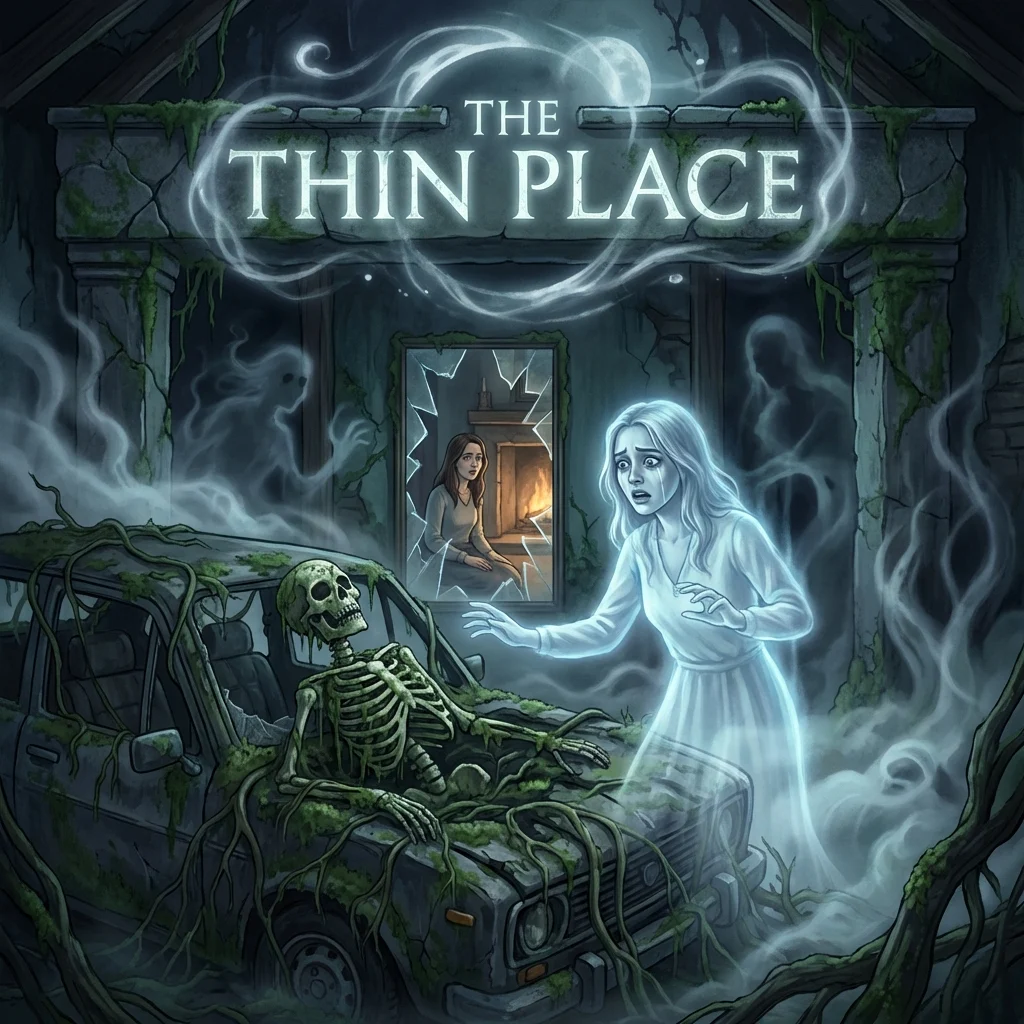
The mist in Blackwood Hollow never truly lifted. It hung low, a perpetual veil that softened the edges of the world, turning trees into vague silhouettes and the winding path to the cottage into a dreamlike corridor. Elena parked her battered sedan at the end of the gravel drive, the engine ticking as it cooled. She stepped out, breathing in the damp air that carried the scent of moss and something older, earthier. The cottage stood before her, a squat stone building with a sagging roof and windows like empty eyes. It was perfect—or so she told herself. Isolation to heal, to write the novel that had eluded her for years since the divorce.
Inside, the air was stale, thick with the smell of mildew. She unpacked quickly: laptop, notebooks, a few clothes, a bottle of whiskey for the long nights. The realtor had mentioned the place was ‘quirky,’ cheap because of the ‘local superstitions.’ Elena didn’t believe in ghosts. She believed in starting over.
That first night, sleep came fitfully. The wind moaned through cracks in the walls, carrying whispers that danced at the edge of hearing. Words? No, just the house settling, she thought, pulling the quilt tighter. In her dreams, the mist seeped under the door, coiling around her ankles, pulling her toward a light that wasn’t quite right—too blue, too wavering.
Morning brought gray light filtering through grimy panes. She brewed coffee on the old stove, set up at the kitchen table scarred with knife marks from previous tenants. Writing came slow, sentences forming like reluctant confessions. By afternoon, unease gnawed. The mist outside seemed closer, pressing against the windows. She shook it off, went for a walk.
The path led to a stream, water black and sluggish. Locals in the nearby village had been sparse with words. Old Mr. Harrow at the pub: ‘Thin place, that cottage. Best leave it be.’ She’d laughed it off. But as she stood by the stream, a ripple formed without wind, and for a moment, she saw her reflection—not her face, but another’s, pale and pleading, mouth moving silently.
Back at the cottage, she lit a fire. Shadows played on the walls, stretching longer than they should. One seemed to linger after the flame steadied, a humanoid shape that turned its head toward her. Heart pounding, she blinked, and it was gone. Imagination, stress. Whiskey helped.
Days blurred. Writing progressed in fits, scenes of loss mirroring her own. But the whispers grew clearer at night. Not wind—voices. Faint arguments, laughter, a child’s cry. She recorded them on her phone, played back: static. Yet she heard them.
One evening, exploring the attic, she found a trunk. Inside, yellowed letters, photos of unfamiliar faces in period clothes. One photo caught her: a woman in a dress like hers, same hair, standing where she did now by the window. Coincidence.
Nights worsened. Dreams intensified: walking through mist into a brighter world, where her ex waited with open arms, their life unfractured. Waking drenched, disoriented. Objects misplaced—keys in the fridge, book opened to unread pages.
She drove to the village. Harrow at the pub, eyes rheumy. ‘The Veil’s thin there. Worlds brush close. Folks go in, come out… changed. Or not at all.’ Elena pressed: ‘What happened to past tenants?’ He shrugged. ‘Some say they see what’s not there. Others cross over.’ She left with a bottle and doubts.
Back home, cold spots roamed the house like invisible guests. A door creaked open to empty rooms. In the mirror, her reflection lagged a second behind.
Pacing slowed her writing to a halt. She burned the letters, but smoke formed shapes in the hearth. Whispers named her: ‘Elena… come… see…’
Desperate, she ventured into the mist at dusk. It swallowed her, thick as soup. Shapes moved—figures beckoning. A hand brushed hers, warm, familiar. Her mother’s? Dead ten years. Panic surged; she stumbled back inside, barring the door.
That night, the dreams pulled harder. She floated between worlds: this one gray and lonely, the other vibrant but shadowed by loss. Alternate lives flickered—successful writer, mother, traveler. Each ended in regret, looping back.
Morning revealed frost on inside windows, patterns like hands pressed outward. She packed, resolve cracking. But the car wouldn’t start. Battery dead, though new.
Trapped, paranoia bloomed. The house breathed with her. Walls pulsed faintly. Whispers constant now, a chorus urging ‘Stay… understand…’
In the attic again, the trunk refilled. New photos: her face, dated yesterday, poses unnatural. Dread coiled.
Dusk fell early. Mist invaded, tendrils under doors. She lit every candle, whiskey bottle half-gone. Voices solidified: her own, layered. ‘You died here. Ten years back. Car crash on the drive. Body never found.’
Laughter bubbled—hers? No.
She fled to the bedroom, barricaded. But the mist seeped, cold fingers on skin. Visions assaulted: the crash, metal twisting, her last breath. Then nothing. Awakening in the cottage, unpacking, loop.
The thin place wasn’t between worlds—it was her grave, woven from regrets. Anomalies: her spirit’s desperate illusions to deny death. Whispers: past echoes refusing silence. The ‘other world’ a lure to stay trapped.
Figures materialized: alternate selves, smiling sadly. ‘Join us. Or cross.’
She saw her corpse then, in the corner, desiccated, eyes milky. The real her, long dead. The living Elena was the ghost, haunting herself.
Understanding crashed: every anomaly recontextualized. Shadows her denial, whispers her pleas, locals figments of memory.
She reached for the mist-door, alternate lives calling. But paused. To cross meant oblivion. To stay, eternal loop.
The mist enveloped. Whispers hushed to a sigh. Outside, mist thinned briefly, then thickened. The cottage waited for the next.