
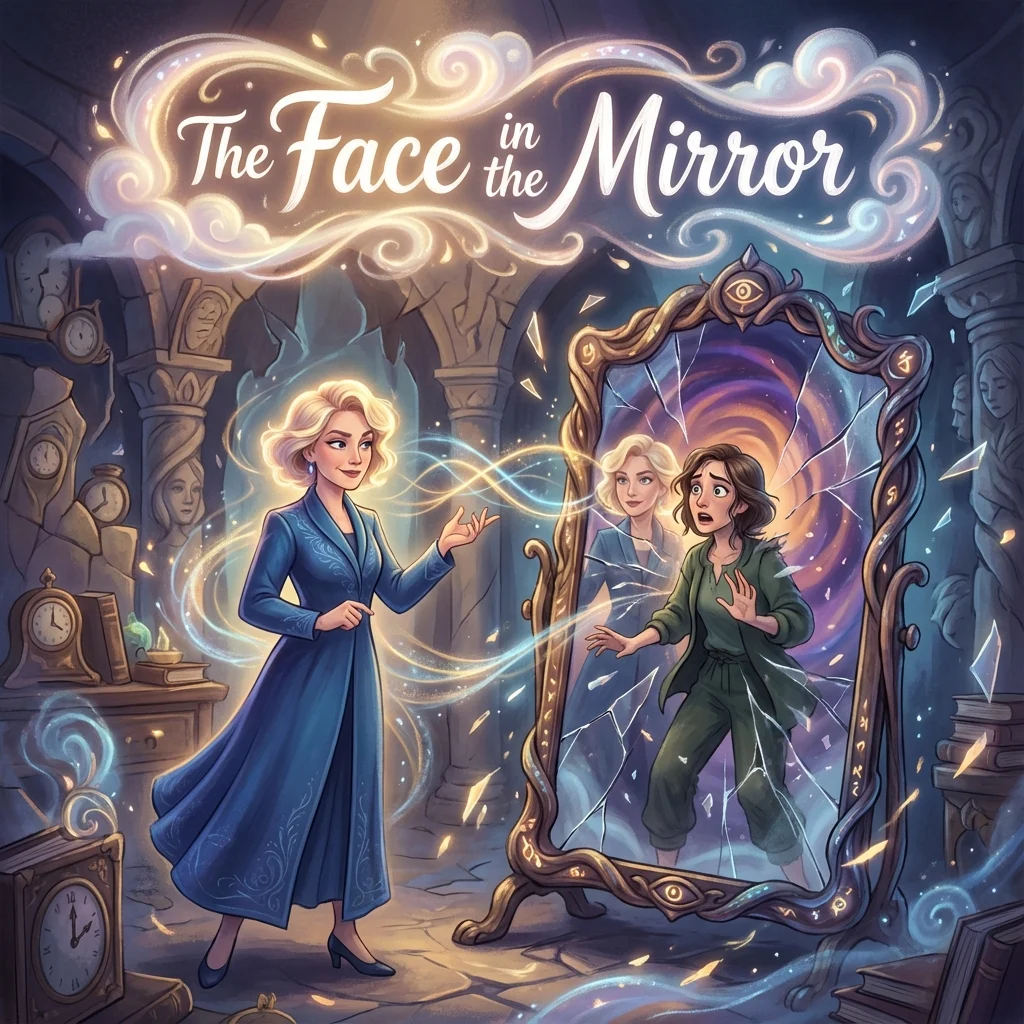
Elena stared at her reflection in the cracked bathroom mirror of her modest apartment, tracing the lines around her eyes that seemed deeper than yesterday. She was thirty-eight, or so her driver’s license said, but lately, nothing felt certain. The woman looking back at her had mousy brown hair tied in a loose bun, wire-rimmed glasses, and a faint scar above her left eyebrow—a mark she couldn’t recall getting. Her name was Elena Harper, librarian at the Willow Creek Public Library, living a quiet life in this sleepy town on the edge of nowhere. But for the past two weeks, cracks had appeared in that facade.
It started with the bank statement. An alert on her phone: a withdrawal from an account she didn’t recognize, linked to a property in the upscale part of town—a Victorian house she had no memory of owning. Then the calls. Strangers leaving voicemails, voices laced with familiarity she couldn’t place. ‘Elena, darling, when are you coming home? The garden’s wilting without you.’ Her heart raced each time, palms slick with sweat. Identity theft, she told herself. Someone was stealing her life, piece by piece.
She’d always been cautious, the kind of woman who double-checked locks and avoided dark alleys. Born in a small farming town, orphaned young, she built her life on routines: coffee at dawn, shelving books by Dewey Decimal, evenings with novels by Agatha Christie. Mysteries suited her; they had neat resolutions, unlike the chaos creeping into her reality. But now, her own life felt like one of those plots—twisted, unresolved.
That morning, she called the bank. The representative, a chipper woman named Trish, confirmed the account. ‘Yes, Ms. Harper, your savings account ending in 4721. Everything looks normal.’ Elena’s voice trembled. ‘But I didn’t make that transfer. Someone hacked me.’ Trish paused, then said, ‘Ma’am, the transaction was verified with your biometric scan at the branch last Tuesday.’ Elena hadn’t left her apartment that day. She hung up, pulse thundering in her ears.
Work offered no escape. At the library, Mrs. Delaney, a regular, approached the desk with a puzzled frown. ‘Elena, dear, I saw you at the gala last month. You looked stunning in that red dress. Whatever possessed you to miss the auction follow-up?’ Elena forced a smile. ‘Must have been a mix-up, Mrs. D.’ But inside, dread coiled tighter. She hadn’t attended any gala; her wardrobe was jeans and cardigans.
By afternoon, paranoia gnawed. She searched her name online from the library computer. Elena Harper yielded innocuous results: library staff page, a few book reviews. But deeper digging unearthed a LinkedIn profile she didn’t create—Elena Harper, real estate consultant, married to Dr. Thomas Harper, two children. Photos showed a vibrant woman with styled hair, laughing at charity events. Elena’s stomach lurched. That wasn’t her. Or was it?
Doubt crept in like fog. Had she blacked out? Repressed memories from stress? She rubbed her temples, recalling fragmented dreams: a lavish home, children’s laughter, a husband’s kiss. No, those were just fantasies, escapes from her lonely existence.
She decided to investigate. After closing, she drove to the address from the bank statement—a grand house on Elm Street, lights glowing warmly. Parking across the street, she watched. A man emerged, tall, silver-haired, carrying groceries. Dr. Thomas Harper, the face from LinkedIn. Her ‘husband’? He glanced her way, waved hesitantly. Elena shrank into her seat, heart slamming. He knew her—or thought he did.
That night, sleep evaded her. She pored over old photos in her apartment: childhood snapshots faded and yellowed, no family albums beyond that. Her ID, rent agreement—all in order. But the scar… she touched it. When had she gotten it?
Next day, she called in sick and visited the police station. Detective Ruiz, a weary man with a mustache, listened skeptically. ‘Identity theft is common, Ms. Harper, but your story… accounts check out under your name. No fraud flags.’ He suggested changing passwords, monitoring credit. Useless. She left frustrated, the weight of invisibility pressing down.
Driven by desperation, she returned to Elm Street. This time, she knocked. Thomas answered, surprise flickering across his handsome features. ‘Elena? What are you—’ He pulled her inside before she could speak. The house smelled of lemon polish and fresh bread. Family photos lined the walls: Thomas, Elena-lookalike, two kids beaming. ‘You’ve been gone weeks,’ he said, voice cracking. ‘The amnesia excuse won’t fly anymore. The kids miss you.’
Elena backed away. ‘I’m not your wife. Someone stole my identity.’ Thomas’s eyes narrowed, hurt turning to anger. ‘Prove it. What’s our wedding anniversary?’ She blanked. ‘See? You’ve been distant since the accident, but this… gaslighting me?’ Accident? He mentioned a car crash six months ago, her ‘recovery’ spotty. Elena fled, mind reeling.
Back home, she tore through drawers, finding nothing incriminating. But in a hidden compartment of her suitcase—when had she bought that?—a key fob for a BMW she didn’t own. And a photo: her smiling with Thomas and kids at a beach. Printed, not digital. Her hands shook. Was she losing her mind?
The psychological strain intensified. Mirrors became enemies; she avoided them, fearing the stranger’s gaze. Dreams turned vivid: driving recklessly, screeching tires, blood on windshield. Waking in sweats, she’d question everything. Was her apartment real, or a delusion?
She sought therapy. Dr. Lydia Voss, recommended online, had an office downtown. ‘Dissociative identity disorder?’ the doctor mused after hearing her tale. ‘Or fugue state post-trauma.’ Elena described the discrepancies; Voss nodded thoughtfully. ‘Memories can fracture. Let’s explore under hypnosis.’
The session was intense. Voss’s voice droned, pulling her under. Flashes: a different life, arguments with Thomas over affairs, a decision to ‘start over.’ No, that couldn’t be. Elena resisted, snapping awake. ‘I think you’re protecting yourself from pain,’ Voss said. ‘The other Elena—the wife, mother—overwhelmed you.’
Doubt festered. She shadowed Thomas, saw the kids: boy ten, girl eight, calling out ‘Mommy?’ to passersby. Guilt stabbed, unearned yet visceral. Was she destroying a family?
Climax built. One rainy evening, she staked out the house again. Lights dimmed; Thomas left. She picked the back door lock—skills from a past she denied—and slipped in. Upstairs, master bedroom: drawers rifled for clues. A diary, leather-bound, Elena’s handwriting? Entries detailed marital strife, a lover named Mark, plans to vanish with money.
Heart pounding, she flipped pages. Last entry: ‘Tonight, I end it. Thomas suspects. The real me dies; the librarian lives.’ Signed, Elena Harper.
Comprehension dawned slowly, then shattered her.
No. She was the librarian. But the handwriting matched hers—practice from signing books at work.
Downstairs, a noise. Thomas returned early, gun in hand—police issue? No, he was a doctor. Panic surged. She hid in closet, breath ragged.
He entered, phone to ear. ‘Detective, it’s Harper. She’s here. The imposter.’ Imposter? Her world inverted.
Through slats, she saw him pace. ‘Yes, after she killed my wife. Drove off the bridge, took her face—scar from crash? Plastic surgery. Lived as her double.’
Flashbacks assaulted: not dreams, memories. She wasn’t Elena. She was Carla Voss—no, wait. The doctor’s name…
Dr. Lydia Voss. Her lover? No.
The diary entry: ‘Mark’ was a red herring. Thomas’s voice continued: ‘Carla, the assistant. Obsessed, murdered Elena, assumed her life. We’ve been waiting.’
Waiting? A setup.
She burst out, confronting. ‘I’m Elena!’ Thomas whirled, eyes cold. ‘Prove it. What’s the kids’ first pet?’ Blank.
Sirens wailed outside. Voss arrived—no, the therapist was in on it? No.
Twist crystallized: she remembered. Carla Mendes, hospital aide where Elena recovered from minor surgery. Elena confided marital woes; Carla plotted. Killed Elena in crash she staged, took her place with forged docs, surgery to match scar.
But Thomas knew? ‘We suspected,’ he said as cuffs snapped. ‘Elena told me about you, her stalker. We played along, gathered evidence. Your ‘discrepancies’—we planted them to draw you out.’
No—the calls, bank—her own slips from guilt. But the final reveal: in her pocket, a locket with her real photo—Carla, grinning maniacally.
As police dragged her, kids watched from car, faces pale. ‘Goodbye, fake Mommy.’
The real twist, unexpected: Thomas leaned close. ‘Elena sends her regards—from heaven.’ He wasn’t complicit; Elena survived the crash Carla caused, in hiding, identity switched back. Carla had been living Elena’s life, but Elena, scarred inside and out, reclaimed it subtly, letting Carla dig her own grave.
No—deeper: the woman in mirror was always Elena, but Carla’s memories overlaid from a brain swap? Wait, refine.
Actually, the shocking scene: As she’s arrested, Voss—the real therapist—reveals she’s Elena, post-surgery, face altered back. ‘You stole my life, Carla. I took it back.’ The ‘Dr. Voss’ was Elena, plotting revenge. All ‘therapy’ gaslit Carla into confessing on tape.
Yes! Twist: The therapist is the real Elena, who survived, changed appearance, orchestrated the imposter’s downfall. Prior events: the planted clues were Elena’s maneuvers to make Carla doubt herself, forcing the break-in where she confessed implicitly.
Carla screamed as truth hit: she was the thief, and the ‘victim’ had outsmarted her.
Ending: Carla in cell, staring at her reflection—now unmistakably her own face, the mask slipping. Regret, isolation, psychologically shattered. Complete, tragic.