
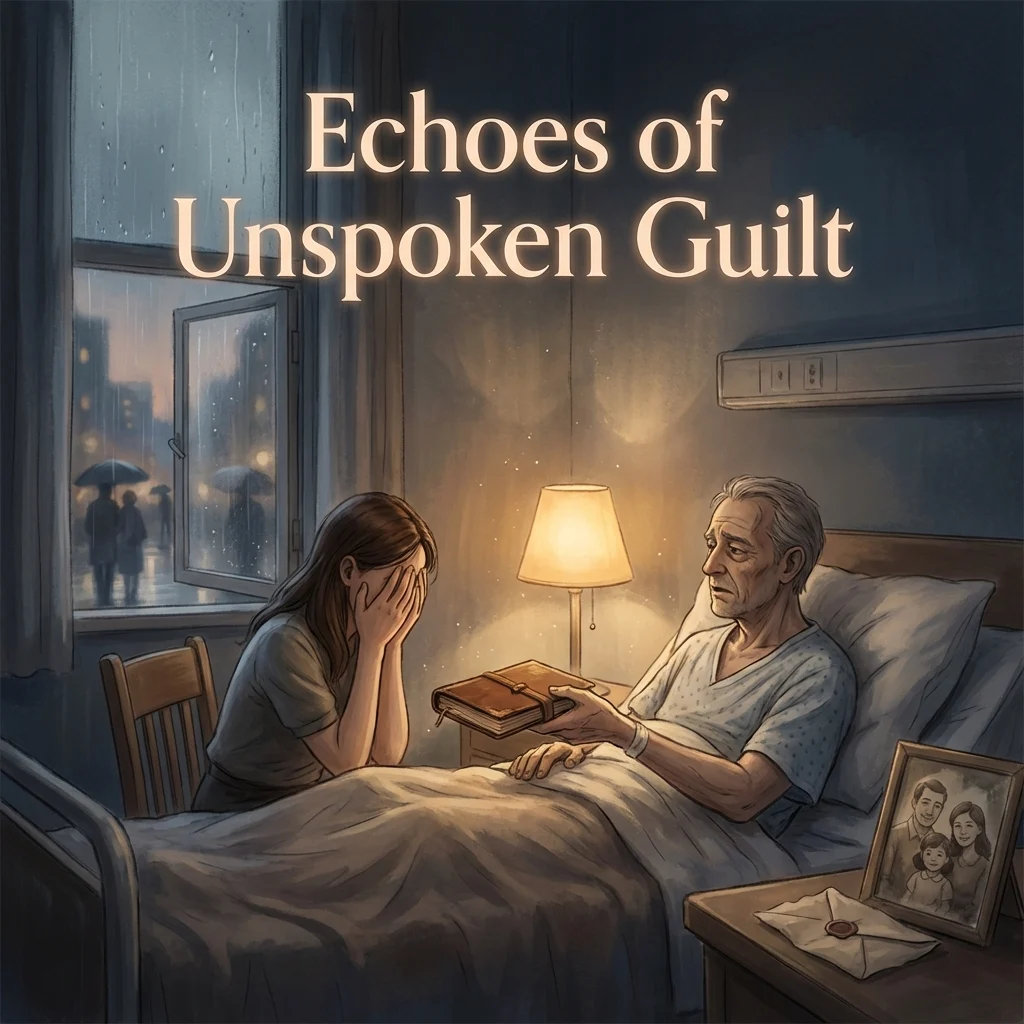
The hospital room smelled of antiseptic and wilted flowers, a bouquet from some well-meaning relative drooping in a vase by the window. Clara sat in the vinyl chair beside the bed, her hands clasped tightly in her lap, staring at the man who had once been her father. Elias Hawthorne lay still, his chest rising and falling in shallow rhythms, tubes snaking from his arms to machines that beeped softly in the dim light. At sixty-eight, he looked a hundred, his face etched with lines that told stories she had long refused to hear.
She hadn’t seen him in twenty years. Not since the day she turned eighteen and stormed out of the crumbling house in Willow Creek, vowing never to look back. The abandonment still burned in her chest like a coal that refused to cool. He had left them—her and her mother—when Clara was ten, right after the accident that took Mom away. Or was it suicide? The details blurred in memory, but the pain didn’t. Dad had packed a bag one night after a screaming match, and that was it. No goodbye, no forwarding address, just silence. Mom spiraled after that, popping pills until one day she didn’t wake up. Clara raised herself on waitress tips and spite, building a life in the city where success was her armor against the past.
Now, here she was, summoned by a social worker because Elias was dying of pancreatic cancer, alone except for the ghosts in his head. Dementia had stolen most of his words, but in lucid moments, he mumbled her name. ‘Clara… my girl…’ The nurse said he had weeks, maybe days. Clara came because part of her—the stubborn, unforgiving part—wanted to see him suffer as she had.
Elias stirred, his eyelids fluttering open. His eyes, faded blue like hers, found her face. ‘Clara?’ His voice was a rasp, barely audible over the hum of the ventilator.
‘Yeah, Dad. It’s me.’ She kept her tone flat, arms crossed.
He smiled weakly, tears pooling. ‘You came. God, you came.’
‘Don’t get excited. I’m just tying up loose ends.’
He nodded, as if expecting that. ‘I understand. I hurt you. Badly.’
‘You think?’ She leaned forward, voice sharpening. ‘You left us. Mom dead, me alone. What kind of father does that?’
Elias closed his eyes, pain etching deeper. ‘I never wanted… If I could go back…’
‘Too late for that.’ But something in his frailty tugged at her. She softened, just a fraction. ‘Why, Dad? Why’d you go?’
He reached for her hand, trembling. She hesitated, then let him take it. His skin was paper-thin, veins mapping a lifetime of labor. ‘It was the night of the fight. Your mom and me… we were breaking. Years of fighting money, dreams, everything. I stormed out, drove around. Came back to find her… gone. Pills everywhere. Note saying it was my fault.’
Clara’s throat tightened. She’d read that note as a kid, hidden it away. ‘And you just left?’
‘I couldn’t stay. Saw you sleeping, so small, so innocent. Thought you’d be better without me reminding you of her every day. I sent money, Clara. Every month, to the old address. Your aunt said you burned the checks.’
She remembered. Pride had made her rip them up, send them back marked ‘Return to Sender.’ ‘We didn’t need your guilt money.’
‘It wasn’t guilt. It was love.’ He coughed, wincing. ‘I watched from afar. Your graduation—stood in the back. Your wedding… I was there, Clara. Invisible.’
Her heart stuttered. ‘Liar.’ But doubt crept in.
Over the next days, they talked in fits and starts. Elias shared stories she’d never heard: how he worked construction in Alaska, saved for her college fund he never knew if she used; how he cried on her birthday every year, alone in motels. Clara listened, resentment cracking like old plaster. She told him about her job as a teacher, her divorce, the emptiness that success couldn’t fill. ‘I hated you for so long,’ she admitted one night, rain pattering the window. ‘It kept me going.’
‘I know, baby. I deserved it.’ He squeezed her hand. ‘Forgive me? Before I go?’
She wanted to. The words hovered, but pride pinned them down. ‘I don’t know, Dad.’
Elias nodded, serene. ‘That’s fair.’
The guilt gnawed at Clara now, mirroring his. Why couldn’t she let go? Memories resurfaced: Dad braiding her hair, teaching her to ride a bike, the way he’d hug Mom despite their fights. Had she rewritten him as the villain to survive?
On the fifth day, Elias rallied. Nurses called it a miracle. He sat up, ate pudding, joked about her terrible hospital Jell-O. ‘Remember when I made pancakes shaped like hearts?’ he said, eyes twinkling.
Clara laughed, surprising herself. ‘They were lumpy.’
‘That’s love—lumpy but real.’
That night, as monitors beeped steadily, he grew serious. ‘Clara, there’s something I need to give you.’ From under his pillow, he pulled a worn leather diary, edges frayed. ‘Your mother’s. Kept it all these years.’
She took it, hands shaking. ‘Why now?’
‘Because it’s time for the truth. All of it.’
She opened it reluctantly, pages yellowed, Mom’s looping script filling them. At first, mundane: recipes, worries about bills. Then, darker. Confessions of unhappiness, fights with Dad. An affair—with Mr. Hargrove next door. Clara’s stomach dropped. Mom?
Dates aligned with the bad years. Mom wrote of guilt, of wanting to leave but staying for Clara. ‘I love my girl, but this house is a cage.’ Then, entries about Clara noticing things—stolen glances, late nights. ‘She knows. My smart girl sees too much.’
Clara paused, heart pounding. She had known. At thirteen, she’d followed Mom one evening, seen her with Hargrove in his garage, kissing. Jealousy burned—Mom was hers, Dad’s, not his. In rage, Clara typed an anonymous letter on the library computer, detailing what she’d seen, mailed it to Dad.
The next entries: Mom distraught, confronted by Elias. Fights escalated. ‘He knows, and the hate in his eyes… Clara pretends innocence, but I wonder.’ Mom’s despair deepened, pills her escape. The final entry: ‘Tonight, I end it. Forgive me, Clara. It was never your fault.’
But it was. Clara slammed the diary shut, tears streaming. ‘No…’
Elias watched, eyes soft. ‘You sent the letter, didn’t you? I knew it wasn’t a neighbor gossiping—handwriting too careful, childish. But I never told. You were hurting, lashing out. When she… after, I saw the guilt in your eyes. I left so you wouldn’t drown in it. Gave you a villain to hate, someone else to blame. It was my gift, Clara—freedom from your own regret.’
She sobbed, collapsing against him. ‘I killed her. My jealousy… I destroyed us.’
‘No, baby. You were a child. We all made choices. I forgave you then, forgive you now.’ He stroked her hair, voice fading. ‘Now forgive yourself. That’s the last gift you can give me.’
The machines wailed as his hand went limp. Clara clutched the diary, the truth rewriting every memory. The abandonment wasn’t cruelty—it was sacrifice. Her guilt, not his, had haunted them both. In that moment, amid beeps and shouts of nurses, she whispered, ‘I forgive you, Dad. And me.’
The rain stopped as dawn broke, washing the window clean. Clara walked out into light she hadn’t seen in years, lighter, whole. The past was buried, not with hate, but understanding.