
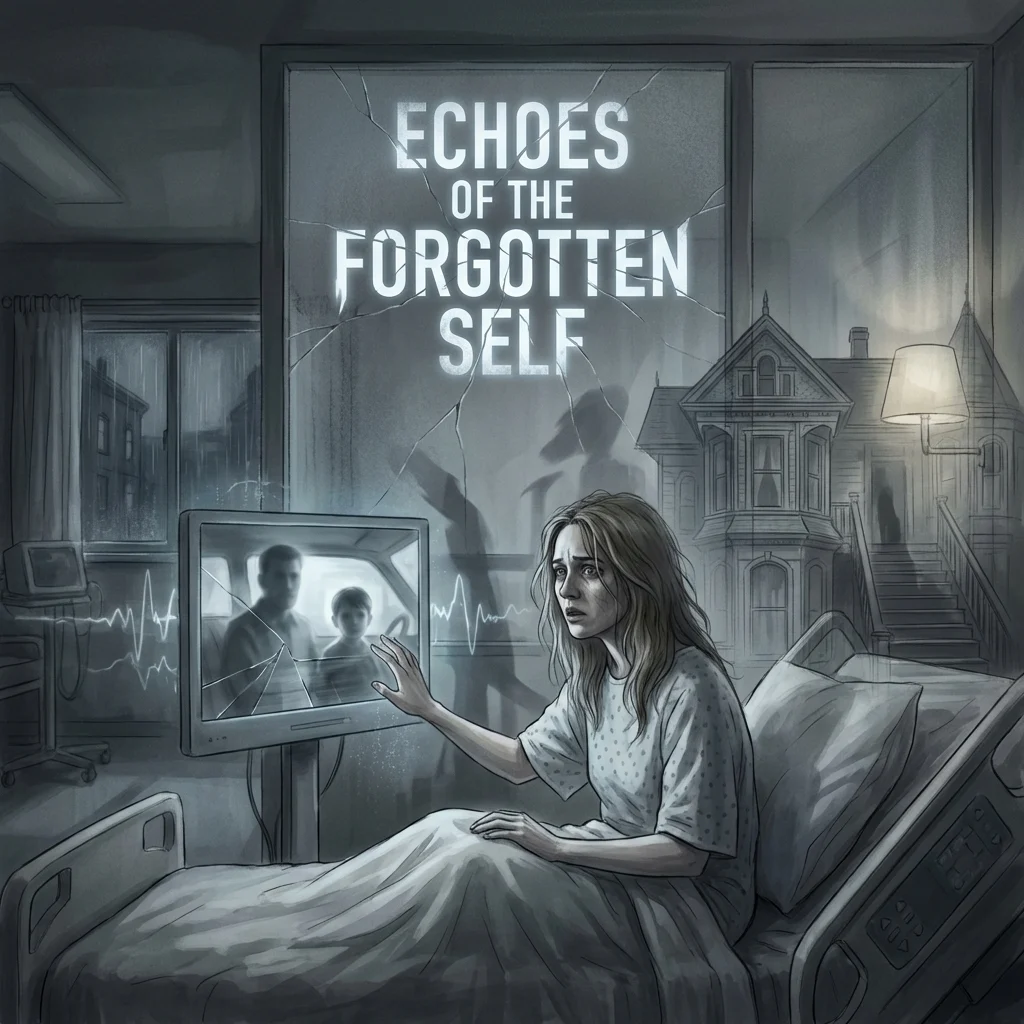
The rain tapped insistently against the windowpane of the old Victorian house on Elm Street, a relentless rhythm that mirrored the unsteady beat of Clara’s heart. She sat in her armchair, the one with the faded floral pattern that her mother had loved, staring at the photograph on the mantel. In it, she was smiling, arm around a man with kind eyes and a boy with tousled hair. Her family. Or what was left of it in her mind.
Clara rubbed her temples, trying to push away the fog that had settled there since the accident. The doctors called it post-traumatic amnesia, said it was common after car crashes. She remembered the screech of tires, the blinding headlights, but the details slipped away like sand through her fingers. Was it night or day? Had she been driving, or was it her husband, Tom? The boy— their son, Jamie—was gone. That much was certain. The pain of it clawed at her chest every waking moment.
She stood, legs shaky, and shuffled to the kitchen. The clock read 3:17 PM, but time felt elastic, stretching and contracting without warning. On the counter lay a notebook, its pages filled with her neat handwriting. ‘Daily Reminders,’ it said on the cover. She flipped it open. ‘Tom died two years ago in the crash. Jamie is safe with your sister. You are Clara Hayes, 42 years old. Do not forget.’
But she did forget. Every morning, the memories rearranged themselves. Sometimes Tom was alive, calling from work. Other times, Jamie was in the next room, playing with his trucks. Clara shook her head, forcing the notebook shut. It was just her mind playing tricks, the therapist had said. Dr. Ellis, with his wire-rimmed glasses and soothing voice, prescribed pills that dulled the edges but never sharpened the truth.
That evening, as the rain intensified, Clara heard footsteps upstairs. Her heart skipped. The house was empty; she lived alone now. Or did she? She crept up the stairs, gripping the banister. The creaks of the old wood amplified her fear. At the landing, a door stood ajar—the one to Jamie’s old room. Light flickered from within.
‘Jamie?’ she whispered, pushing the door open. The room was as she remembered: posters of dinosaurs on the walls, a model spaceship on the shelf. But there, sitting on the bed, was a small figure. A boy, no more than eight, looked up with wide eyes.
‘Mom?’ he said, voice trembling.
Clara gasped, rushing forward. ‘Jamie! Oh God, Jamie!’ She enveloped him in her arms, inhaling the scent of soap and little boy. He was real, warm, solid. Tears streamed down her face. ‘I thought… I thought you were gone.’
He pulled back, confused. ‘Gone? I was just playing. Why are you crying?’
The joy ebbed into confusion. Clara glanced at the calendar on the wall: October 15, 2018. The crash had been in 2020. This couldn’t be. She stumbled back, hand to her mouth. ‘What year is it?’
Jamie tilted his head. ‘2018, silly. Are you okay?’
Her mind reeled. She fled the room, down to the living room, snatching the notebook. The entries were different now: ‘Tom is at work. Jamie is upstairs. Pick up milk on the way home.’ No mention of the crash. No reminders of loss.
Days blurred into one another. Clara clung to Jamie, cooking his favorite meals, reading bedtime stories. Tom came home each evening, kissing her cheek, asking about her day. But fissures appeared. Tom’s face would shift mid-conversation, aging suddenly, scars appearing where none had been. Jamie’s laughter echoed hollowly sometimes, like a recording.
She started hiding notes for herself in drawers, under mattresses. ‘This is not real. The crash happened. They are dead.’ But by morning, the notes were gone, or rewritten in her own hand denying them.
Nights were the worst. Dreams where she gripped the steering wheel, rain-slicked roads, Tom’s screams as the truck barreled toward them. ‘You did this,’ a voice whispered. ‘You were drunk.’ But awake, the memory dissolved.
Dr. Ellis’s appointments became lifelines. ‘Your brain is protecting you, Clara,’ he said. ‘Repressed memories. Common in survivors.’
‘Survivors?’ she echoed. ‘Am I the only one?’
His eyes softened. ‘Yes. The crash took Tom and Jamie. You’ve been coming here for two years.’
But on the drive home, Tom was waiting in the driveway, waving.
The tension mounted. Clara stopped sleeping, pacing the house, whispering questions to the shadows. Why did the photos change? One day, Jamie had a scar on his cheek; the next, smooth skin. Tom’s voice deepened, then lightened.
One afternoon, she found a letter in the mailbox, no stamp, handwritten: ‘Stop lying to yourself. You killed them.’ Her handwriting.
Panic surged. She confronted Tom that night. ‘Tell me the truth. Are you real?’
He laughed, that familiar chuckle. ‘Of course, honey. What’s wrong?’
She grabbed a knife from the block. ‘Prove it. Tell me something only you would know.’
His face flickered, like a bad TV signal, and for a moment, she saw blood, mangled metal. Then he was back, placating. ‘Clara, put it down. You’re scaring Jamie.’
Jamie appeared in the doorway, eyes pleading. She dropped the knife, sobbing.
But the doubts festered. She began recording videos on her phone, narrating her day. ‘Today, Tom made pancakes. Jamie drew a picture. But I know it’s wrong.’ Reviewing them later, the footage showed empty chairs, silent rooms. Her voice overlaid on nothing.
The rain returned, heavier than before. Clara locked herself in the attic, surrounded by old boxes. Digging through, she found accident reports, yellowed newspaper clippings: ‘Local Woman Survives Fiery Crash; Husband and Son Perish.’ Photos of the wreckage. Her name, Clara Hayes, sole survivor. Blood alcohol level over limit.
Guilt crashed over her like a wave. But the footsteps started again. ‘Mom?’ Jamie’s voice from below.
No. She wouldn’t go down. Instead, she smashed the window, shards raining like tears. Sirens in the distance—had she called? No.
The door rattled. ‘Clara,’ Tom’s voice, urgent. ‘Open up.’
She barricaded it with a trunk. ‘You’re not real!’ she screamed.
Silence, then a soft knock. ‘Clara, it’s Dr. Ellis. Open the door.’
She froze. How?
Peering through a crack, it was him, alone. ‘I’ve been watching you. Your mind is fracturing the reality to cope with the guilt. Tom and Jamie—they blame you because you were driving drunk. You killed them.’
‘No,’ she whimpered.
‘The truth is hiding, Clara. Let it out.’
The attic felt smaller, walls closing in. Memories flooded: the bar that night, argument with Tom, grabbing keys against his pleas. The road, swerving, impact.
But then, a new memory surfaced, sharp and unbidden. Not her behind the wheel. Tom, drunk, wrestling the wheel from her after she tried to stop him. Jamie screaming. She had blacked out from the airbag, waking to assume guilt.
Dr. Ellis pounded. ‘Face it!’
She laughed, hysterical. The room spun. Another memory: Dr. Ellis in the courtroom, testifying she was unfit, pushing the DUI narrative to cover his own affair with her.
The door burst open—not Dr. Ellis, but police, guns drawn. ‘Clara Hayes, step out.’
In that moment, as cuffs clicked, the house dissolved. No Victorian grandeur, but stark white walls of a hospital room. Tubes in her arms, monitors beeping. She was restrained to a bed, eyes fluttering open from coma.
Dr. Ellis stood there, real this time, face pale. ‘Clara? You’re awake. After five years.’
The truth hit like the crash: the ‘house’ was her coma dream, memories twisted by guilt she didn’t deserve. Tom had been driving, confessed before dying. But her mind, wracked by survivor’s guilt, hid the truth, replaying fabricated scenarios to punish herself. Jamie had survived too, adopted by her sister, waiting for her recovery.
She smiled weakly as her sister entered with a teenage boy—Jamie, grown. ‘Mom?’
The rain outside the window was real, washing away five years of shadows.