
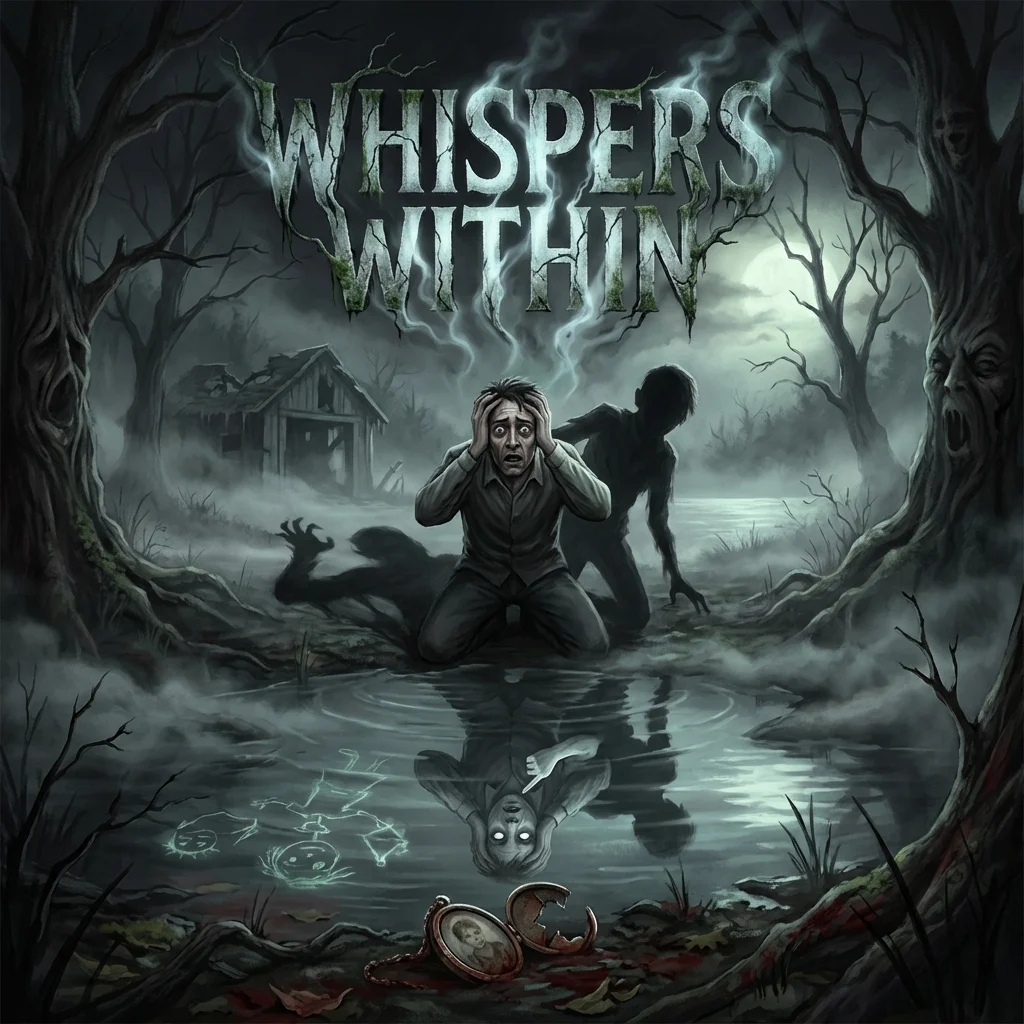
Mark Thompson stared at the ceiling, the faint hum of the city filtering through his apartment window. Thirty-five years old, successful architect, no family, no complications. Life was ordered, precise, like his blueprints. But tonight, as sleep evaded him, a peculiar itch began in his chest—not on the skin, but deeper, as if something stirred beneath his ribs. He rubbed at it absentmindedly, dismissing it as indigestion from the late-night takeout.
The next morning, the itch was gone, replaced by a mild headache. At the office, sketches flowed effortlessly from his hand, but midway through a meeting, his voice faltered. ‘We need to… end this project,’ he said, the words tasting foreign on his tongue. His colleagues exchanged glances. ‘Mark, you mean accelerate it?’ He nodded quickly, laughing it off as a slip. But inside, a whisper echoed: *Wrong word, brother.*
That night, the whisper returned, clearer. *Mark… let me speak.* He bolted upright in bed, sweating. The room was empty, shadows pooling in the corners. He checked the doors—locked. No one else lived there. ‘Stress,’ he muttered, popping a sleeping pill.
Days blurred. The whispers grew insistent, always in a voice eerily like his own, but rougher, hungrier. *You stole everything.* His hand would twitch during drives, veering toward oncoming traffic before he yanked the wheel back. Fingers fumbled forks at dinner, nearly stabbing his palm. He saw his doctor, underwent scans. ‘All clear,’ the man said. ‘Anxiety, perhaps. Try therapy.’
Therapy was a waste. The shrink droned about repressed memories. Mark had no repressed memories—parents dead in a car crash when he was twelve, raised by grandparents, straight A’s, architecture degree, career. Clean slate. But the voice mocked: *Clean? Lies.*
One evening, alone with a bottle of whiskey, Mark stripped to examine himself in the full-length mirror. His body was fit, unmarred. Yet pressing his ear to his chest, he swore he heard two heartbeats—one steady, one erratic, fluttering like a trapped bird. Panic rose. He grabbed a kitchen knife, traced the blade lightly over his sternum. A shallow cut, blood beading. Nothing emerged but red. The voice laughed softly. *Not yet.*
He started avoiding people. Work calls went unanswered. Food soured in his mouth. Sleep brought dreams: two boys playing by a lake, one pushing the other under, bubbles rising, a splash, silence. He woke gasping, the whisper chanting, *You did it. My turn now.*
Desperate, Mark dug through storage boxes in the basement. Dust motes danced in the flashlight beam. At the bottom of a trunk, yellowed photo album. Flipped pages: grandparents stern-faced, then a single photo of two identical boys, about eight years old, grinning gap-toothed. One labeled ‘Mark,’ the other ‘Michael.’ No other photos of Michael. Heart racing, he searched online—obituaries, nothing. Grandparents’ diaries? Burned years ago, he recalled vaguely.
The voice purred. *They believed your story. Drowned accidentally. Poor Mark, all alone.* Mark slammed the album shut. Hallucination. Coincidence. But his body betrayed him again that night. Legs carried him to the bathroom, hands turned on the faucet, dunked his head under icy water, holding until lungs burned. He fought free, coughing, staring at his reflection—eyes wild, but whose?
Weeks passed in isolation. The apartment reeked of unwashed clothes, takeout boxes. Mark’s reflection grew gaunt, but the voice strengthened. *Fight all you want. This shell is mine.* Limbs disobeyed more frequently—arms crossing against his will during futile workouts, mouth forming words he didn’t voice: ‘I hate you.’ He taped his mouth shut at night, bound wrists to bedposts. Useless. The control slipped further.
One dawn, resolve hardened. He drove to the lake from the dreams, two hours out of city, gravel crunching under tires. The water was still, mist-shrouded. Standing at the edge, the voice screamed triumph. *Here we return.* His body waded in, clothes heavy, water rising to knees, waist. *Drown like I did.* Mark thrashed mentally, but legs propelled forward.
Neck-deep now, cold seeping into bones. Memories—not dreams—surfaced. Summer day, age eight. Brother Michael, weaker swimmer, taunting him. ‘You’re slow, Mark!’ Push in fun. Splash. Michael doesn’t come up. Panic. Mark swims away, cries to grandparents: ‘He fell! Help!’ Body found days later, verdict accidental. Guilt buried deep, but it festered, birthing the voice—Michael’s vengeful ghost in his mind.
No. Deeper truth clawed up. *Not guilt. You knew.* He had held Michael under, jealous of parents’ favoritism toward the ‘sickly’ one. Lifted the verdict with lies. Lived Michael’s life—better grades, approval.
Water closed over his head. Lungs screamed. *Join me.* Darkness beckoned.
But in the final struggle, a revelation shattered everything. The voice wasn’t Michael’s rage—it was Mark’s own suppressed conscience, the real Mark, the boy who died that day. The imposter, Michael’s killer, had assumed the name, the life, mimicking perfectly. All memories of success were fabricated atop stolen identity. The ‘voice’ was the original soul fighting back from oblivion.
As the imposter realized this—too late—the body convulsed not in drowning, but release. The real Mark surged, reclaiming. But the vessel was ruined, water filling lungs. Twin souls warred in the depths, neither victorious, both condemned to the murk.
The lake surface smoothed, undisturbed. No body recovered—another mystery for the town.