
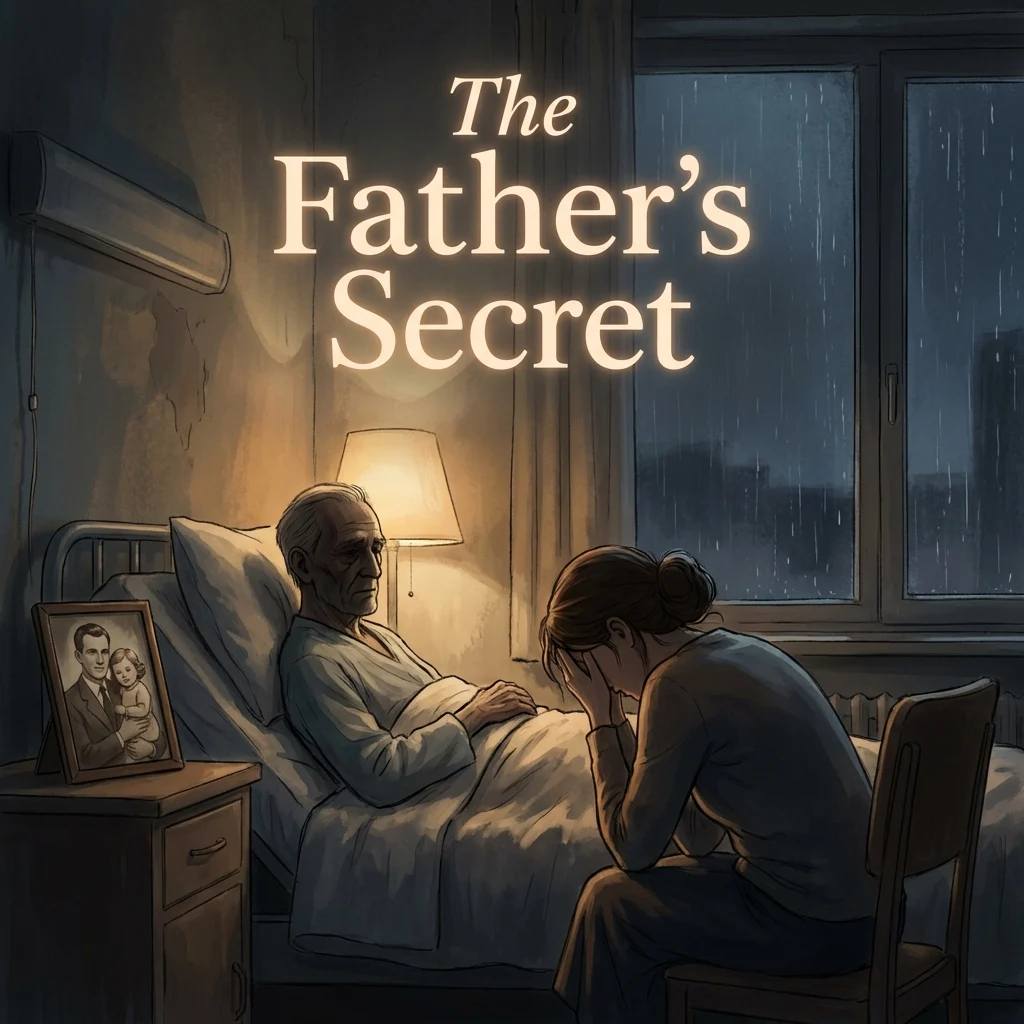
The rain drummed a mournful tattoo against the leaded windows of the old Victorian house, mirroring the steady ache in Anna’s chest. She stood at the foot of the sweeping staircase, her fingers white-knuckled around the worn banister, the same one she had slid down countless times as a child, laughing with unbridled joy. That was before everything shattered. Before Mother’s death. Before the accusations that tore their family apart. Twenty years since she had stormed out of this very house, suitcase in hand, vowing never to return. Now, at thirty-eight, she was back. Not for reconciliation, she told herself, but for duty. Her father, Robert Hargrove, was dying.
The call had come two days ago from a nurse at the hospice service. Liver failure, advanced. ‘He’s asking for you, Ms. Ellis,’ the voice had said, using her married name—her new name, the one she adopted to sever ties with the Hargrove legacy of pain. Anna Ellis, successful corporate lawyer in Chicago, with a corner office and a loveless marriage dissolving in the courts. What did it matter now? She had booked the first flight to this forgotten corner of Vermont, rented a car, and driven through sheets of rain to the house that haunted her dreams.
Each step up the stairs creaked under her weight, protesting like old bones. The air grew thicker, laced with the scent of illness—antiseptic masking decay. Robert’s bedroom door stood ajar, a sliver of yellow lamplight spilling into the hall. She pushed it open, her heart thudding.
He lay propped against pillows in the four-poster bed that had been her parents’ marriage altar. Machines beeped softly, IV lines snaking into his arms. At sixty-eight, he looked ancient, his once-broad frame shrunken, skin sallow stretched over sharp bones. His eyes, though—those piercing blue eyes, so like her own—fluttered open.
‘Anna.’ His voice was a gravelly whisper, barely audible over the rain. ‘You came.’
She nodded, throat tight, and dragged a wingback chair to the bedside. ‘Of course, Dad.’ The word felt foreign, rusty on her tongue.
Silence enveloped them, thick and oppressive. Memories flooded her: summer barbecues in the backyard, her father tossing her into the air with booming laughter; holiday dinners where his stories held the table captive. Then, the darkness after Mother’s suicide. The pills found scattered on the bathroom tile, the coroner’s report citing depression exacerbated by marital strife. Anna had been eighteen, furious, convinced Father’s drinking and rumored affairs had driven her mother to despair. ‘You killed her!’ she had screamed that final night, packing her bags for college and beyond. She hadn’t returned for the funeral, hadn’t answered his letters, hadn’t visited when his business folded. Guilt gnawed at her now, a constant companion these past years, whispering that she had abandoned him to grieve alone.
‘I’m sorry,’ he said suddenly, his frail hand reaching for hers. His touch was cool, trembling.
‘For what?’
‘For failing you. For failing her.’
Tears stung her eyes. ‘No, Dad. I should apologize. I left you. After everything… I was selfish.’
He shook his head, wincing as pain flickered across his face. ‘You needed to escape this place. I understand.’
Over the following days, the rain never ceased, turning the world outside into a blurred watercolor. Anna stayed, sleeping in her old room down the hall, its faded floral wallpaper a time capsule. Nurses came and went, adjusting drips, checking vitals, their prognoses grim: days, maybe a week. In the quiet hours between, father and daughter talked—or rather, Robert reminisced, his voice gaining strength in memory.
He spoke of her childhood triumphs: the day she won the spelling bee, standing tall on stage while he cheered from the back row; the bike rides down Pine Hill, wind whipping her hair as he ran alongside, shouting encouragement. ‘You were fearless, Annie. My little firecracker.’
Anna listened, hungering for these fragments of a happier time. But always, the shadow of Mother loomed. Evelyn Hargrove, vibrant artist, gone at forty-five. ‘Why did she do it, Dad?’ Anna asked one evening, as twilight bled through the curtains. ‘Was it really you? The fights, the drinking?’
Robert’s gaze drifted to the window. ‘I wasn’t the man she deserved. I let work consume me, came home late, snapped when she needed tenderness. The rumors… they hurt her.’ He paused, eyes glistening. ‘I drove her away, piece by piece.’
Anna squeezed his hand. ‘You don’t have to carry that alone anymore. I forgive you.’ But inside, her own guilt twisted sharper. She had piled blame on him, fled, left him to shoulder it all. What kind of daughter did that make her?
Nights deepened their intimacy. She read to him from his favorite Dickens novel, her voice steadying as his breathing labored. She spooned broth into his mouth, wiped sweat from his brow. In these acts, absolution seeped in, slow as the IV fluids. Yet regret lingered, a specter. ‘If only I’d come sooner,’ she whispered one midnight, as thunder rumbled. ‘We could have had more time.’
‘Time enough now,’ he murmured.
On the fifth day, his strength ebbed further. The nurses increased morphine, the room growing hazy with medication and sorrow. Anna barely left his side, her world narrowing to the rise and fall of his chest. She shared snippets of her life: the law firm promotions, the failed marriage to Tom, the apartment overlooking Lake Michigan. ‘It’s empty without family,’ she admitted.
Robert smiled faintly. ‘You’re strong, Anna. Always were.’
That evening, as storm winds howled, he gestured weakly. ‘The box… under the bed.’
She knelt, pulling out a weathered wooden chest, its hinges protesting. Inside: yellowed photo albums, faded letters bound with twine.
‘Open the album first.’
Pages turned to images of her infancy—Mother cradling a swaddled bundle, Father beaming beside them. But one photo paused her: Mother with a man Anna didn’t recognize, arms linked, laughing on a beach. ‘Who’s that?’
‘Now the letters. The top one.’
Her hands trembled as she unfolded the paper, postmarked six months before Mother’s death. Evelyn’s elegant script filled the page.
‘Dearest Robert,
I can bear this secret no longer. The guilt consumes me. Anna isn’t yours. That summer with Mark, the painter from the city… it was a mistake born of loneliness. But you knew, didn’t you? The blood tests when she was born. Yet you stayed, raised her as your own. You’re a better man than I deserve. If I leave this world, promise you’ll love her still. Tell her the truth only if it heals. Forgive me.
Evelyn’
Anna’s breath caught, the letter slipping from fingers gone numb. She stared at her father, the room spinning. ‘You… knew? All this time?’
He nodded, tears tracing paths down sunken cheeks. ‘From the beginning. Doctor confirmed it. But she was my daughter, blood or not. I loved her—love you—with everything I had.’
‘Why didn’t you tell me? After she died, when I blamed you…’
‘I was distant on purpose, Annie. Wanted you to have space to find your roots if you wished, seek out Mark. He died years ago, but… I took the blame for her suicide because it was easier. Her guilt over the affair broke her. I let you hate me to protect you from that pain. It was my choice, my regret.’
The revelation crashed over her like the storm outside. All those years of misplaced fury—his silences not rejection, but sacrifice. The coldness after Mother’s death not guilt over killing her, but shielding Anna from a fractured identity. Her abandonment? Unnecessary cruelty to a man who had given her his name, his heart, unconditionally.
‘Dad…’ She collapsed beside the bed, sobbing, clutching his hand. ‘Forgive me. I didn’t know.’
‘Nothing to forgive, daughter.’ His eyes softened, peace settling. ‘You were always mine.’
His breathing slowed, the monitor’s beeps stretching longer. Anna held on, whispering love into the fading light. At dawn, as rain eased to drizzle, Robert slipped away, a faint smile on his lips.
Anna sat vigil through the morning, the letter in her lap. The house felt less haunted now, filled instead with the somber intimacy of truth unveiled too late. She would bury him beside Mother, then decide her path. For the first time in decades, regret yielded to gratitude—a bittersweet anchor in the quiet aftermath.