
The gravel path to the cemetery wound like a scar through the overgrown hill, and Henry trudged it daily, his knees protesting with each step. At sixty-eight, his body was a map of regrets—arthritic joints from years bent over engines in the garage, a liver scarred from whiskey that never quite drowned the memories. But it was the stone at the end of the path that held him captive. ‘Lillian Marie Harper. Beloved wife and mother. Taken too soon.’ The dates mocked him: 1975-2013. Ten years ago, almost to the day.
He knelt, placing a single wild daisy against the base, its petals already wilting in the autumn chill. ‘I’m sorry, Lil,’ he whispered, voice gravelly from disuse. The accident replayed in his mind like a film stuck on loop: the rain-slicked road, the screech of tires, the sickening crunch of metal. He’d been driving. Drunk. Lillian in the passenger seat, laughing about some silly joke their son David had told that morning. Then the swerve, the tree, her neck snapping like dry twigs. David safe at home with the sitter. Henry’s fault.
Back in the one-bedroom apartment that smelled of stale takeout and regret, Henry poured a finger of bourbon—doctor’s orders be damned, though the doctor had been dead two years. The fridge hummed its lonely song as he stared at the photo on the mantle: the three of them at the lake, David eight years old, gap-toothed grin, Lillian radiant, Henry younger, unscarred. That was before. He sipped, the burn familiar, and wondered if David ever thought of them. Their son, now thirty, lived two towns over with his wife and kids. No calls, no visits. Henry didn’t blame him. Who’d want a killer for a father?
The first letter arrived a week later, slipped under his door like an accusation. Henry’s hands trembled as he opened it.
‘Dad,
Mom’s birthday is coming up. The kids want to visit her grave. I know you go there. Meet us Saturday at noon? We need to talk.
David’
Henry read it three times, heart pounding. Talk? About what? Forgiveness? Or final severance? He crumpled it, then smoothed it out. Saturday. He’d be there.
The cemetery was shrouded in mist that Saturday, the kind that clings like guilt. Henry arrived early, pacing before Lillian’s stone, rehearsing apologies he’d never earned. A car pulled up—David’s sensible SUV, two car seats visible in the back. David stepped out first, tall like Henry but with Lillian’s blue eyes, hardened now. Behind him, Sarah, his wife, holding their daughter Lily, five, and son Max, three. They approached slowly, the children clutching flowers.
‘Dad,’ David said flatly, no hug.
‘Happy birthday, Grandma!’ Lily chirped, placing her bouquet. Max mimicked her, giggling.
Henry forced a smile, throat tight. ‘They’re beautiful, son. Like their grandma.’
Sarah nodded politely, her grip on Lily protective. They stood in silence as the kids scattered petals, then David cleared his throat. ‘We can’t stay long. Kids have soccer.’
‘Of course.’ Henry shoved hands in pockets. ‘Thanks for coming. For inviting me.’
David’s jaw tightened. ‘It’s for Mom. Not you.’
The words landed like punches, but Henry nodded. ‘Fair enough.’
As Sarah herded the kids back to the car, David lingered. ‘Look, Dad. Therapy’s been… helping. Sarah pushed me. I don’t hate you anymore. But I can’t forget.’
Henry’s chest ached. ‘Don’t need forgiveness, son. Just… glad you’re happy.’
David’s eyes flickered—pity? Anger? ‘You destroyed us. Mom gone, you drinking into oblivion. I raised myself.’
‘I know.’ Henry’s voice cracked. ‘Wish I could take it back.’
David turned away, then paused. ‘Come for dinner sometime. For the kids.’
It was the closest to an olive branch Henry would get. He nodded, watching the SUV disappear into the mist.
The dinners started tentatively. First one awkward, kids curious about ‘Grandpa Henny,’ Sarah watching like a hawk. Henry sober for it, hands steady as he helped Max with peas. Stories of Lillian—her laugh, her apple pie—drew hesitant smiles from David.
Second dinner, David asked about the garage. ‘You still fixing cars?’
Henry nodded. ‘Old habits.’
‘Thought you’d quit after… you know.’
‘Can’t quit life, son.’
Over weeks, months, the frost thawed. Henry babysat once, told Lily bedtime stories of his own childhood. David shared job stresses, Sarah warmed. Henry dared hope—this fractured family mending, stitch by stitch.
But the guilt gnawed. Nights alone, the bourbon called louder. One evening, after too many glasses, Henry penned a letter. Truths he’d buried deeper than Lillian.
‘David,
If you’re reading this, I’m gone. Heart’s been failing. Can’t lie anymore. The night of the accident, I wasn’t drunk. Not that night.
You ran into the road after your ball. Rain pouring, headlights blind. I swerved to miss you. Hit the tree. Mom… she didn’t make it.
Told police I drank. Took the blame. Couldn’t let you carry that, son. Eight years old. Pure heart. Would’ve destroyed you.
Lived with lie ten years. Worth it, seeing you thrive. Forgive? No. Understand? Maybe.
Love always,
Dad’
He sealed it, hid it in his bible. Maybe one day.
Then the pain came—a vise around his chest. Henry collapsed in the kitchen, phone out of reach. Neighbors found him hours later, barely breathing. Ambulance wail, hospital lights blurring.
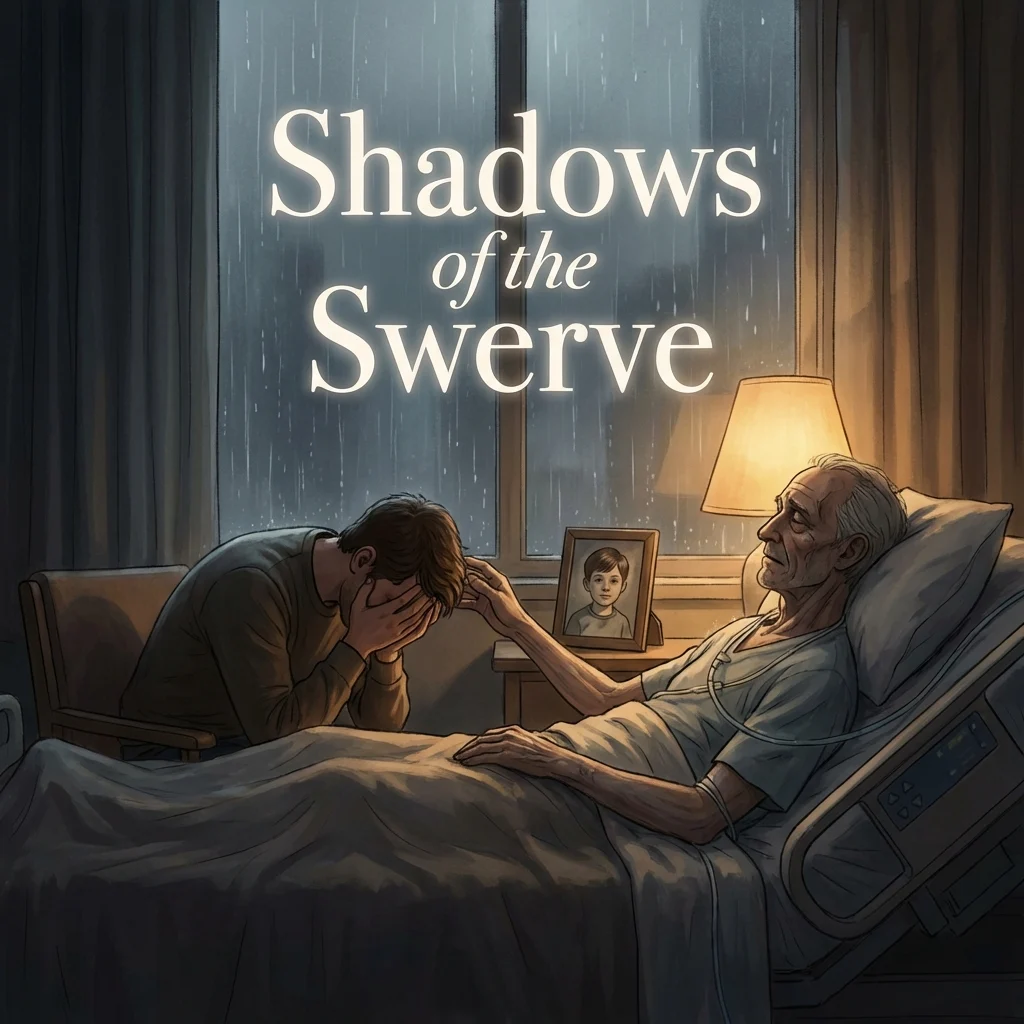
He woke to beeps, David’s face hovering, pale.
‘Dad! Jesus, you scared us.’
‘Son…’ Henry rasped, IV tugging.
Sarah in corner with kids, eyes red. Doctor murmured ‘heart attack,’ ‘lucky.’
David gripped his hand. ‘Don’t do that again. We need you.’
Henry’s eyes welled. ‘Letter… apartment. Bible.’
David frowned. ‘What letter?’
‘Truth. About the crash.’
David’s face shifted—confusion, dread. ‘Dad, no. You were drunk. Police report—’
‘Lie.’ Henry coughed. ‘For you.’
Sarah ushered kids out. David leaned close. ‘What do you mean?’
Words weak, Henry told it: the ball bounding into street, David’s small figure darting, scream of brakes not his but the swerve. Lillian’s last gasp, ‘Save him.’ Police at scene, breathalyzer clean but he confessed drunk anyway. Court, jail time, AA— all to shield David.
David recoiled, face crumbling. ‘I… I ran out? After the ball?’
Henry nodded, tears tracking. ‘Protected you. Lie became my life.’
David staggered back, hand to mouth. ‘All these years… I hated you. Blamed you. Therapy, anger… it was me?’
‘Not you, son. Love made me lie.’
David sank into chair, sobs shaking him. ‘Mom died… because of me? And you… you took it?’
‘Worth every regret.’ Henry reached, weak. David clasped it, forehead to bedrail.
‘Forgive you? God, Dad. Forgive myself?’
Nurses bustled, but time stretched intimate, somber. Sarah returned, understood from whispers, tears flowing. Kids peeked, confused but hugged.
Days blurred. Henry stabilized, but truth hung heavy. David visited daily, eyes haunted anew. No more blame for Henry—now self-recrimination.
Last night, Henry whispered, ‘Live free, son. No shadows.’
David nodded, voice thick. ‘Love you, Dad. Always did.’
Henry closed eyes, peace settling like mist lifting. The lie had haunted, but truth freed them—too late for Lillian, but not for them. In quiet heartbreak, bonds reformed, fragile but real.
The gravel path went untrodden that winter, daisies frozen. But Henry’s stone beside Lillian’s read: ‘Devoted father. Saved by love.’ David brought grandchildren, stories now of two heroes, regrets folded into forgiveness.