
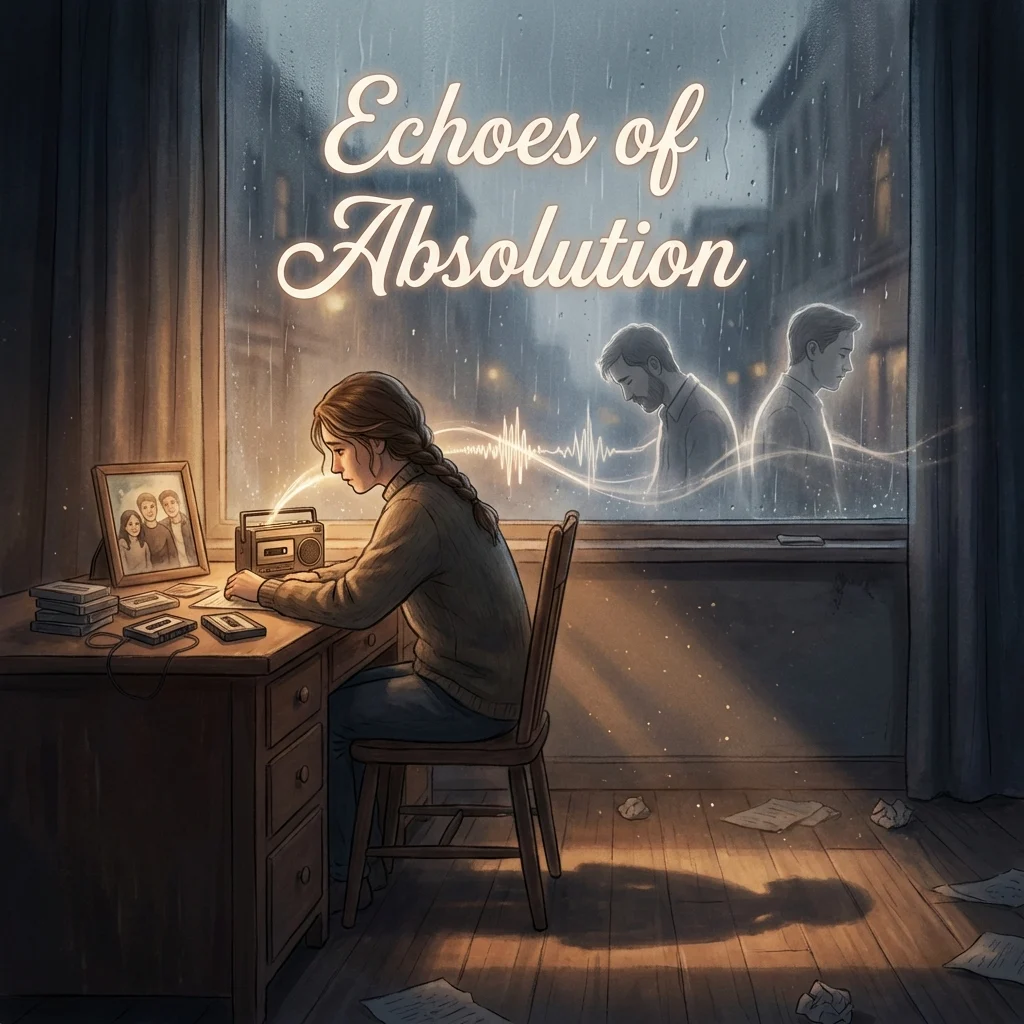
David’s hands trembled as he held the letter, the paper crisp and unforgiving under his calloused fingers. Thirty years had passed since that night, yet the words blurred through eyes long accustomed to seeing ghosts. The return address was Emily’s, Alex’s sister, the one family member who hadn’t entirely cut him off. ‘Memorial for Alex. Please come. It’s time.’ Time for what? Absolution? Punishment? He crumpled the letter, then smoothed it out again, the habit of a man who preserved every remnant of his past like a masochist collecting scars.
His apartment was a shrine to regret, canvases stacked against walls depicting swirling mists of gray and black, fractured faces half-emerging from shadow. Each brushstroke a confession, each canvas a tombstone. David, now fifty-eight, had been a promising artist once, full of fire and color. Alex had been his muse, his love, his everything. Until the crash.
The party had been raucous, bottles emptying under stars that witnessed too much. They argued—stupidly, about futures, commitments, the city versus small-town life. David drank more, anger fueling shots. Alex tried to pull him away. ‘Let’s go home,’ he’d said. Home was the old lake house, an hour’s drive. David grabbed the keys, insisted he was fine. The road twisted like a serpent, fog rolling in from the lake. Then the swerve—tires screaming, metal twisting, silence. David woke in hospital, Alex gone. Dead on impact, they said. Driver’s side crushed. David’s fault.
He never drove again. Never loved again. Friends faded, family blamed. Emily sent Christmas cards at first, then silence. Until now.
The drive to Willow Creek was a descent into memory. The highway looked the same, that fatal bend marked by a weathered cross, plastic flowers bleached by sun. David pulled over, heart pounding. Kneeling there, he whispered, ‘I’m sorry. Every day.’
The community hall buzzed with ghosts of the past. Faces older, lines etched deeper, but eyes lit with reminiscences. Emily spotted him immediately, her silver hair pulled back, face softer than he remembered. ‘David.’ Her voice cracked. They hugged awkwardly, bodies strangers.
‘Why now?’ he asked later, as they sat with coffee in a corner.
‘Because holding it longer hurts too much. Alex wouldn’t want this—you punishing yourself.’
Stories flowed: Alex’s laugh at college parties, his guitar playing by campfires, the way he’d light up talking about David’s art. David listened, pain twisting. ‘He was too good for me.’
‘That night,’ Emily said quietly, ‘he called me from the hospital before surgery. Whispered something about protecting you.’
David’s breath caught. ‘What?’
She shook her head. ‘Too weak. Then he was gone.’
That night, at Emily’s cozy bungalow, albums spread across the kitchen table. Photos of boys wrestling in grass, young men kissing stolen moments, Alex beaming beside David’s first gallery show. ‘You were happy,’ Emily said.
‘Until I destroyed it.’
‘Tell me what you remember.’
He did, haltingly. The argument, the drinks, grabbing keys. ‘I blacked out after swerve. Woke to cops saying I killed him.’
Emily’s eyes glistened. ‘The report listed you as driver. But Alex… he was always protecting you.’
Sleep evaded him. Dawn found them driving to the lake house, boarded up but standing. Inside, dust motes danced in sunbeams, furniture shrouded. They sat on the sagging porch, sharing silence.
‘I visit his grave every year,’ David admitted. ‘Bring a painting. Tell him I’m sorry.’
Emily nodded. ‘He’d hate that. He loved you, flaws and all.’
Back in town, old friends gathered at the diner. Laughter mixed with tears. Tom, Alex’s college buddy, clapped David’s shoulder. ‘He talked about you nonstop. Said you’d be famous.’ Irony stung—fame traded for obscurity, self-imposed.
Nights blurred into days. David helped Emily sort Alex’s belongings: letters, trinkets, a box of tapes. One labeled ‘For David – If I can’t say it.’ Heart racing, he reached for it.
‘Not yet,’ Emily said gently. ‘Tomorrow. After the service.’
The memorial service was intimate, church pews half-full. Eulogies painted Alex as saint—kind, loyal, selfless. David spoke last, voice breaking. ‘I carry him every day. His loss shaped me, broke me. Forgive me, Alex.’ Applause was polite, eyes sympathetic.
After, Emily drove him home. Parked in driveway, she pulled the tape from glovebox. ‘Now.’
Old cassette player whirred to life in the quiet kitchen. Alex’s voice emerged, frail post-surgery, monitors beeping faintly.
‘David… if you’re hearing this, I didn’t make it. Listen close. That night, you passed out drunk in passenger seat after our fight. Stumbled getting in car, dropped keys. I took them, switched seats while you slept. Road was foggy, I misjudged bend—too fast, trying to get you safe. Crashed. Cops came, saw me driving. But you woke confused, I told them switch story? No… I told paramedics you were passenger, but they assumed… wait, no. I made them think you drove. Pushed you into driver narrative? Head hurts…
Truth: I drove. Drunk too, but less. Wanted to save you from DUI, jail, end of art career. Told Emily switch seats mentally, but physically I was driver. Surgery complications… love you. Forgive yourself. Live.’
Voice faded. Silence crashed.
David staggered, world inverting. Decades of torment—alcoholism battled alone, art darkened, love forsaken—all built on lie. Alex sacrificed truth, took blame, died protecting him. Guilt reversed: David’s self-flagellation honored Alex’s love by wasting it.
Emily wept. ‘He begged me keep secret till right time. Thought you’d move on. But you didn’t.’
David clutched table. ‘Why tell now?’
‘Cancer. Months left. Can’t carry alone.’
He pulled her close. Forgiveness flowed—not just for past, but future. ‘We’ll face it together. For Alex.’
Sun set, painting room in gold. David saw color again.